
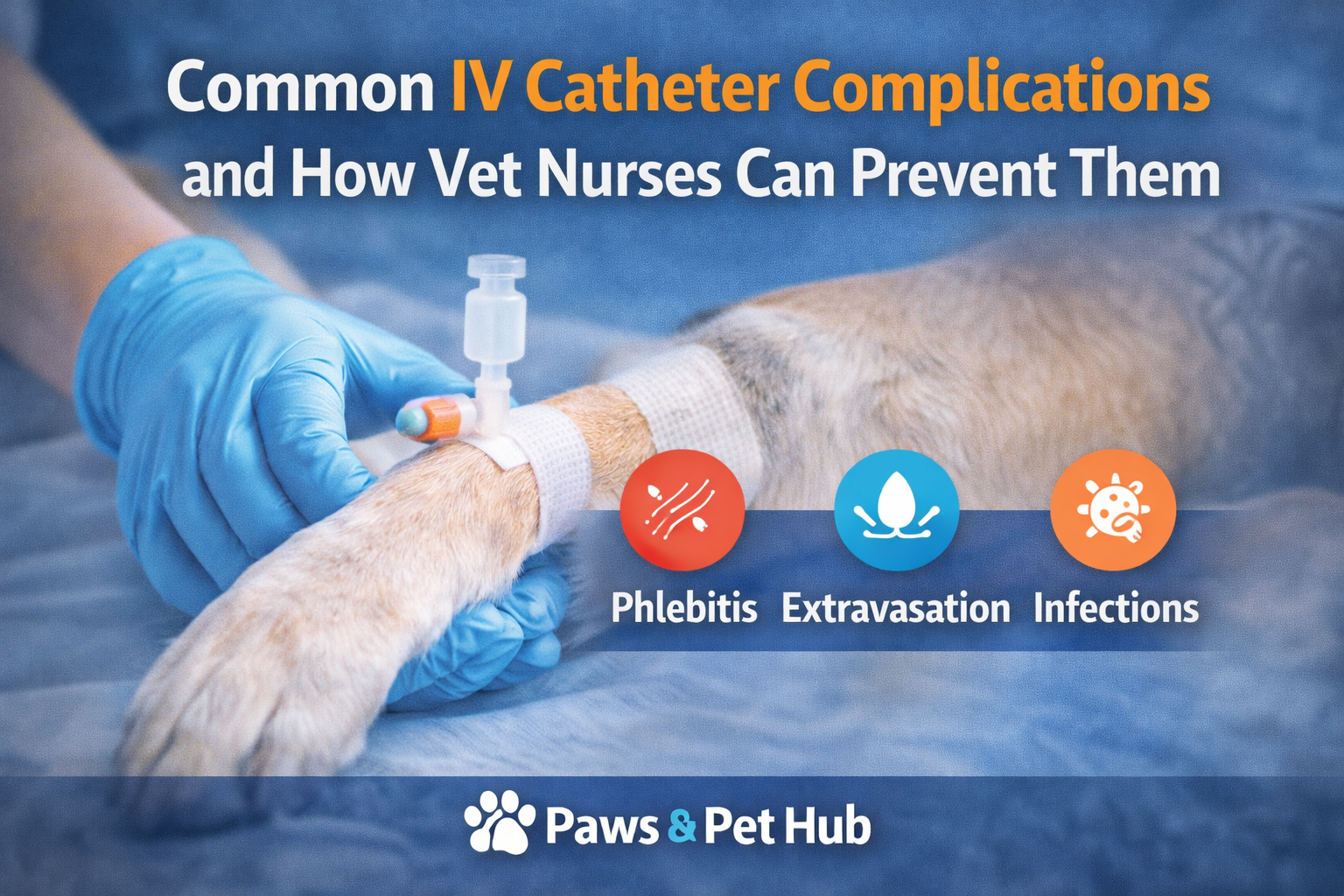
Intravenous (IV) catheters are a cornerstone of modern veterinary care. They allow rapid administration of fluids, medications, and nutrition, but they also carry risks if not monitored and maintained correctly.
For veterinary nurses, understanding common IV complications and how to prevent them is essential for patient safety and professional confidence.
Why IV Catheter Care Matters
Poor IV catheter management can lead to:
- Phlebitis (vein inflammation)
- Extravasation of fluids or drugs
- Infection (local or systemic)
- Patient discomfort or distress
Proper technique not only protects patients, it also demonstrates the high standards expected of veterinary nurses in practice and OSCEs.
1. Phlebitis (Vein Inflammation)
Signs to watch for:
- Redness along the vein
- Swelling at the insertion site
- Pain or discomfort when touched
- Heat over the vein
Prevention tips:
- Use aseptic technique during insertion
- Secure the catheter without tension or kinking
- Rotate catheter sites according to practice policy (usually every 72–96 hours)
2. Extravasation (Fluid Leakage)
What it is:
Fluid or drugs escape from the vein into surrounding tissues, which can cause tissue irritation or damage.
Prevention:
- Always check for blood return before flushing
- Observe the limb during administration
- Use a secure but comfortable bandage or tape
Quick action: Stop the infusion immediately if extravasation occurs and inform the supervising vet.
3. Catheter-Associated Infections
IV lines can introduce bacteria if asepsis is not maintained.
Signs:
- Swelling, redness, or discharge at the site
- Fever in the patient
- General malaise or lethargy
Prevention:
- Strict hand hygiene
- Sterile catheter and fluids
- Regular monitoring of the catheter site
- Document catheter changes and observations
4. Occlusion or Blockage
Causes:
- Blood clots within the catheter
- Kinking of the line
- Precipitation from incompatible medications
Prevention:
- Flush the catheter regularly with heparinised saline (if indicated)
- Avoid incompatible drug combinations
- Ensure lines are straight and free from tension
5. Dislodgement or Accidental Removal
Patients may pull out catheters, especially if anxious or uncomfortable.
Prevention:
- Proper restraint and positioning
- Secure the catheter with appropriate tape or bandaging
- Keep IV lines out of the patient’s reach where possible
Best Practices for Veterinary Nurses
- Always document catheter insertion, maintenance, and removal
- Check IV sites at least every 2–4 hours for hospitalised patients
- Communicate changes or concerns promptly to supervising vets
- Keep up-to-date with OSCE and practice protocols
Quick Reference Table: IV Catheter Complications
| Complication | Signs | Prevention |
|---|---|---|
| Phlebitis | Redness, swelling, pain | Aseptic insertion, rotate sites, secure properly |
| Extravasation | Swelling, redness, discomfort | Check blood return, observe limb, stop infusion if noted |
| Infection | Discharge, fever, malaise | Sterile technique, monitor site, document |
| Occlusion | Slow/no flow, kinks | Flush regularly, avoid incompatible drugs |
| Dislodgement | Catheter pulled out, leakage | Secure bandage, proper restraint |
Final Thoughts
IV catheters are essential tools, but careful placement, monitoring, and maintenance are what protect patients and keep veterinary nurses confident in their skills.
Regular practice, observation, and adherence to protocols will reduce complications — and make your OSCE or workplace performance shine.



Leave a Reply