
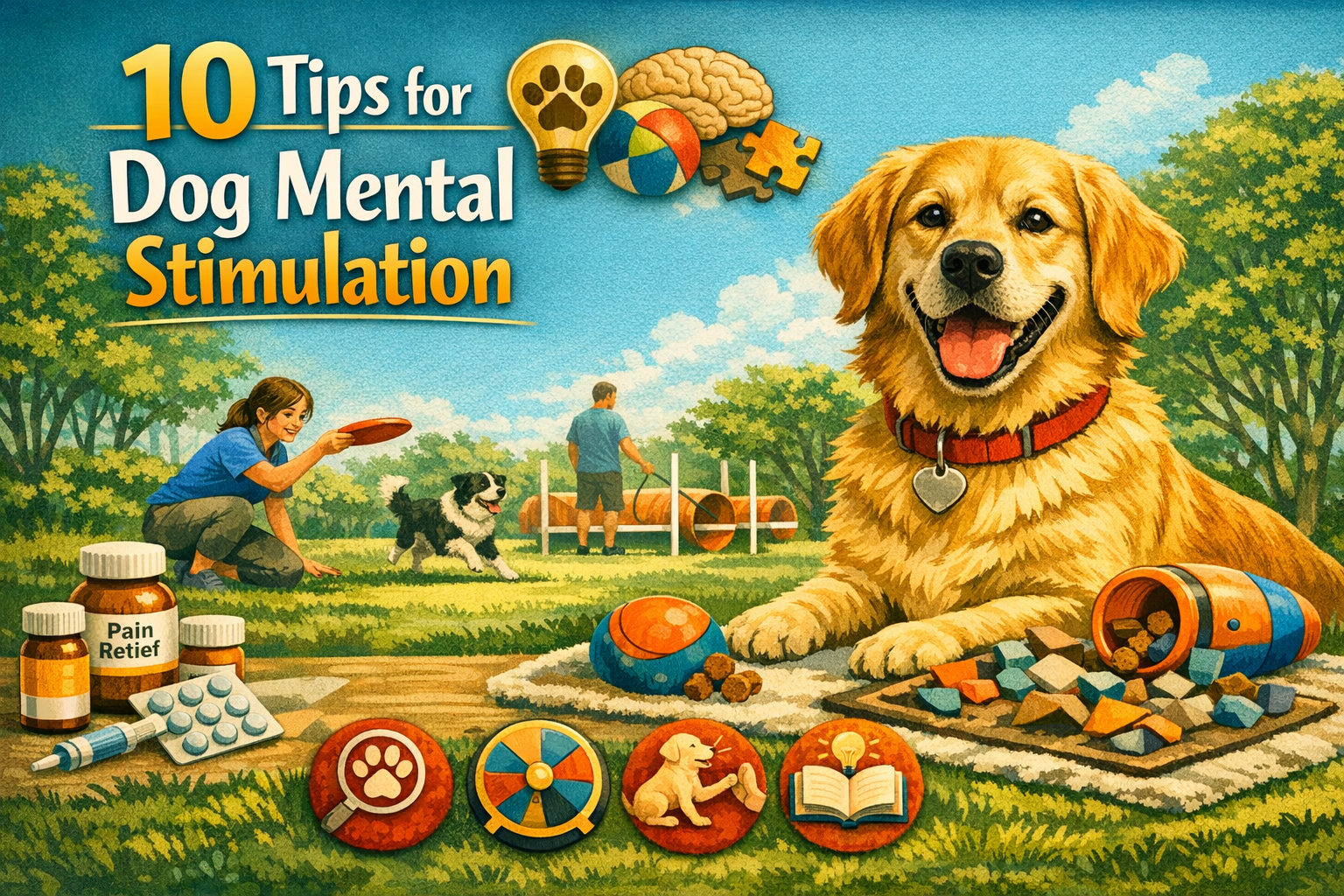

Introduction
Just like humans, dogs need mental exercise to stay happy and healthy. Dog mental stimulation improves behaviour, reduces anxiety, and prevents destructive habits caused by boredom.
Even a daily walk isn’t enough for many breeds. In this post, we’ll explore 10 proven activities for dog mental stimulation that you can easily incorporate into your routine.
1 Puzzle Feeders and Treat Toys
Puzzle feeders are one of the easiest ways to boost dog mental stimulation.
Dogs work for their treats, which encourages problem-solving and slows down fast eaters. Popular options include:
- Kong toys
- Snuffle mats
- Interactive treat dispensers
These toys also strengthen your bond as you guide your dog through the challenge.
2 Hide and Seek
Playing hide and seek is a fun game that develops dog mental stimulation skills:
- Hide somewhere in your home
- Call your dog’s name
- Reward them with praise or treats when found
This game also enhances scent tracking and recall skills.
3 Training Sessions
Training sessions provide mental enrichment and strengthen obedience. Short, frequent sessions (5–10 minutes) are best.
Focus on:
- Teaching new commands
- Reinforcing old ones
- Trick training for fun
Positive reinforcement improves your dog’s confidence and sharpens their mind.
4 Scent Games
Dogs naturally explore the world through scent. Scent games are excellent for dog mental stimulation:
- Hide treats in different rooms
- Use boxes or cups to create a “find it” challenge
- Introduce scent trails for advanced dogs
These activities mimic natural hunting behaviour and reduce boredom.
5 Food-Dispensing Toys
Rotating food-dispensing toys encourages problem-solving. Rotate toys weekly to maintain dog mental stimulation without monotony.
6 Interactive Play with Humans
Playing tug, fetch with a twist, or teaching tricks fosters mental engagement:
- Use variable rules or changing obstacles
- Introduce new locations
- Encourage strategic thinking
This strengthens your bond and improves focus.
7 Outdoor Exploration
Daily walks are physical, but structured outdoor exploration is also a mental workout:
- Change walking routes
- Introduce new surfaces or smells
- Allow sniffing time (don’t rush!)
A sniff-focused walk stimulates the brain more than a fast-paced stroll.
8 Dog Sports
Activities like agility, flyball, or rally obedience combine mental and physical stimulation.
- Agility courses challenge problem-solving and coordination
- Flyball promotes teamwork
- Rally obedience improves focus and decision-making
These sports are excellent for high-energy or working breeds.
9 DIY Brain Games
You don’t need fancy toys for dog mental stimulation:
- Muffin tin + tennis balls = treat puzzle
- Cardboard boxes with hidden snacks
- Bottle spinning games
DIY enrichment is budget-friendly and highly effective.
10 Rotate Toys and Challenges
Dogs get bored with repetition. Rotate toys, change rules, or adjust difficulty to maintain dog mental stimulation.
- New textures, scents, and challenges keep the brain engaged
- Prevents boredom-related destructive behaviours
Bonus – Obstacle Courses and Problem-Solving for Dogs
Another effective way to boost dog mental stimulation is by introducing interactive problem-solving activities that encourage independent thinking. For example, you can create obstacle courses using household items like chairs, cushions, and boxes, hiding treats or toys along the route for your dog to find.
This type of enrichment not only challenges their memory and problem-solving skills but also improves their confidence and focus. Combining physical and mental tasks in this way ensures that your dog is fully engaged, reducing boredom-related behaviours such as excessive barking, chewing, or digging.
Regularly changing the layout or difficulty level keeps your dog’s brain active and prevents routine from becoming monotonous.
Benefits of Dog Mental Stimulation
Regular mental exercise helps prevent:
- Anxiety and stress
- Excessive barking
- Destructive chewing
- Hyperactivity
- Cognitive decline in older dogs
It also strengthens the human-dog bond and improves overall wellbeing.
FAQ Section
Q: How much mental stimulation does a dog need?
A: Short daily sessions (10–30 mins total) are enough for most dogs, spread throughout the day.
Q: Can senior dogs benefit from mental stimulation?
A: Absolutely. Older dogs benefit from slower, easier puzzles to prevent cognitive decline.
Q: Are mental games enough without physical exercise?
A: No. Dog mental stimulation should complement daily walks or play for complete wellbeing.
External Resources
- 1. Dog Enrichment Activities
This page explains why mental and physical activities are important for dogs and gives practical ideas for indoor enrichment.
👉 https://www.aaha.org/resources/boredom-busters-indoor-enrichment-for-dogs/
🐾 2. DIY Enrichment Guide from ASPCA
This site has step-by-step ideas for DIY puzzles and enrichment toys using household items.
👉 https://www.aspca.org/pet-care/dog-care/canine-diy-enrichment
🐕 3. Senior Dog Enrichment Advice (Cornell University)
This article covers enrichment activities suitable for ageing dogs, including modified scent work and gentle games.
👉 https://www.vet.cornell.edu/departments-centers-and-institutes/riney-canine-health-center/canine-health-topics/senior-dog-enrichment




Leave a Reply