
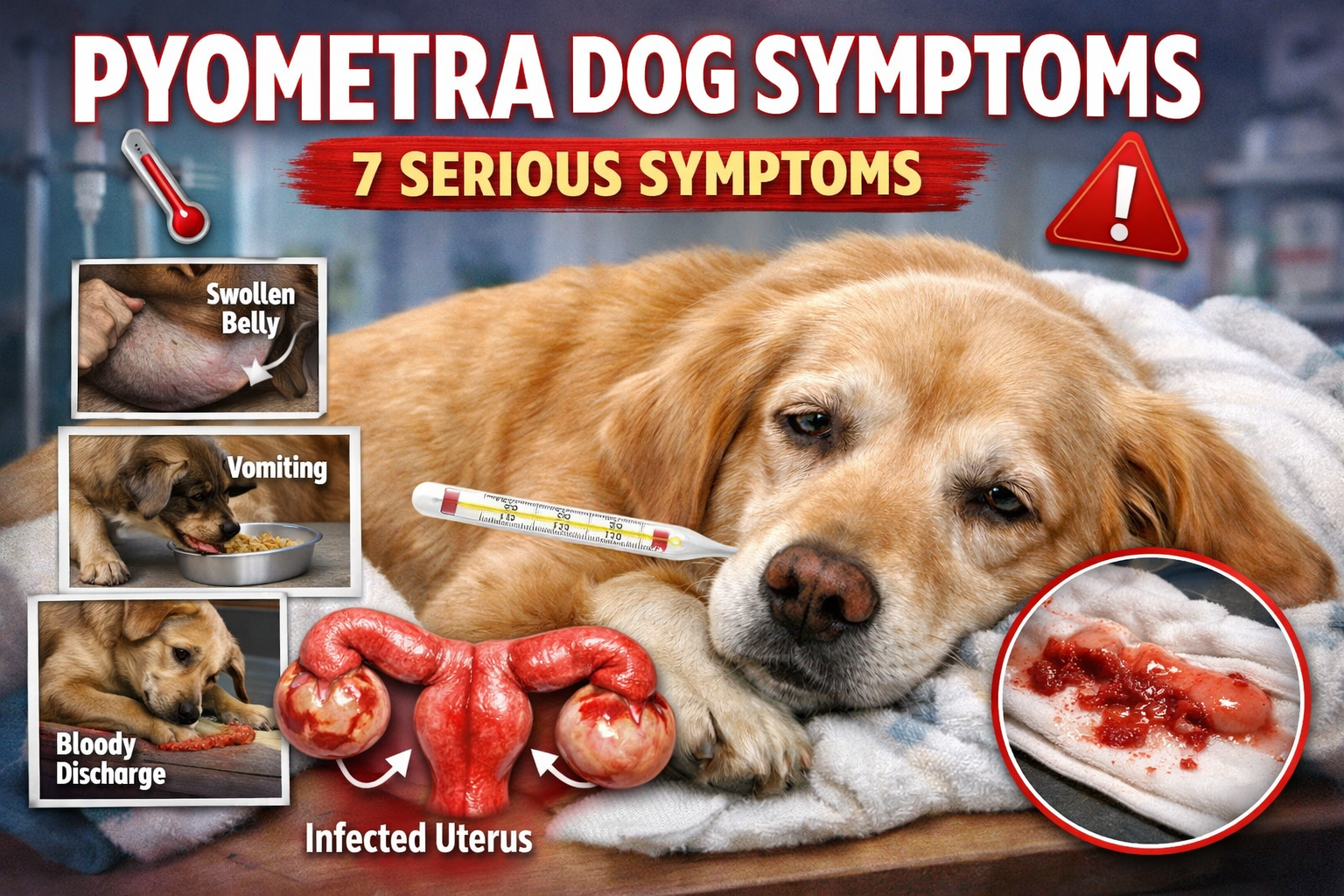

Pyometra is one of the most serious reproductive emergencies in dogs, and it can become life-threatening very quickly if not treated. Many pet owners don’t realise how fast it develops or how subtle the early signs can be, which is why understanding pyometra dog symptoms could genuinely save your dog’s life.
This guide breaks everything down in a clear, pet-owner-friendly way so you know exactly what to look for, what happens at the vet, and what recovery looks like.
Read also: Pyometra Dog Treatment: A Guide for RVNs
What is Pyometra in Dogs?
Pyometra is a severe infection of the uterus that occurs most commonly in unspayed female dogs. It usually develops after a heat cycle when hormonal changes create the perfect environment for bacteria to grow inside the uterus.
There are two types:
- Open pyometra – pus drains from the vagina
- Closed pyometra – pus is trapped inside the uterus (more dangerous)
Closed cases are especially risky because symptoms may be less obvious until the dog becomes very unwell.
Let’s take a look at 7 pyometra dog symptoms.
7 Warning Pyometra Dog Symptoms You Should Never Ignore
Recognising pyometra dog symptoms early is crucial. The condition can progress rapidly, sometimes within days.
1. Increased thirst and urination
One of the earliest signs is often excessive drinking and urinating.
2. Lethargy and weakness
Dogs may seem unusually tired, reluctant to move, or generally “not themselves.”
3. Loss of appetite
A sudden refusal to eat is a common red flag.
4. Vomiting or nausea
Digestive upset is frequently seen as toxins build up in the body.
5. Swollen abdomen
The abdomen may appear bloated or uncomfortable, especially in closed pyometra.
6. Vaginal discharge (open pyometra)
This may be foul-smelling, pus-like, or blood-tinged.
7. Fever or collapse
In severe cases, dogs can rapidly deteriorate and become critically ill. If you notice any pyometra dog symptoms, contact your vet immediately.
If you notice even a combination of these signs, it is an emergency.
Read also: Why Is My Dog Scooting on His Bottom? Causes, Treatment, and When to Worry – Paws and Pet Hub
Pyometra Dog Diagnosis: How Vets Confirm It
A prompt pyometra dog diagnosis is essential because the condition can quickly become life-threatening.
At the vet, diagnosis may include:
- Physical examination
- Blood tests (often showing infection and inflammation)
- Ultrasound imaging to view the uterus
- X-rays in some cases
These tests help confirm whether pyometra is present and how severe it is, which directly affects treatment options.
Pyometra Dog Treatment Options
Once diagnosed, pyometra dog treatment must begin immediately.
There are two main approaches:
1. Emergency surgery (most common and effective)
2. Medical management (rare and only in specific cases)
In most situations, surgery is strongly recommended because it removes the infected uterus entirely, which is the source of the infection.
Pyometra Dog Surgery: What Happens?
Pyometra dog surgery is called an ovariohysterectomy, which means removal of the ovaries and uterus.
During surgery:
- The infected uterus is carefully removed
- The abdomen is flushed if necessary
- The dog is placed on intravenous fluids and antibiotics
- Pain relief is given before and after the procedure
Because many dogs with pyometra are already unwell, this is considered a high-risk emergency surgery, but it is also the most effective life-saving treatment.
Pyometra Dog Recovery: What to Expect
After surgery, pyometra dog recovery depends on how sick the dog was before treatment.
Typical recovery includes:
- 24–72 hours of close monitoring in some cases
- Antibiotics for infection control
- Pain relief medication
- Gradual return to eating and drinking
- Restricted exercise for around 10–14 days
Most dogs start improving quickly after surgery, often within 24–48 hours, especially once the infected uterus has been removed.
Owners should monitor:
- Wound healing
- Energy levels
- Appetite and hydration
- Any signs of infection or swelling
Pyometra Dog Prevention: How to Stop It Happening
The most effective pyometra dog prevention method is spaying your dog.
Spaying removes the uterus and ovaries, completely eliminating the risk of pyometra.
Other important prevention points include:
- Avoiding hormonal treatments unless prescribed
- Regular veterinary checks for intact females
- Being extra vigilant after heat cycles
It’s worth noting that pyometra becomes more common in middle-aged and older unspayed dogs, so prevention becomes even more important with age.
Why Pyometra is So Dangerous
Pyometra is not just a local infection—it affects the whole body.
As bacteria multiply, toxins enter the bloodstream, which can lead to:
- Sepsis
- Organ failure
- Shock
- Death if untreated
This is why even mild-looking pyometra dog symptoms should never be ignored.
When Should You See a Vet?
You should seek emergency veterinary care immediately if your dog is:
- Unspayed and showing any signs of illness after a heat cycle
- Drinking more than normal with lethargy or vomiting
- Showing vaginal discharge or abdominal swelling
Do not wait to “see if it improves”—pyometra progresses quickly and requires urgent treatment.
Final Thoughts
Pyometra is one of the most serious conditions affecting unspayed female dogs, but it is also highly treatable when caught early.
Understanding pyometra dog symptoms, recognising the importance of fast pyometra dog diagnosis, and acting quickly on pyometra dog treatment can make the difference between life and death.
With prompt pyometra dog surgery, most dogs go on to make a strong pyometra dog recovery, and the condition can be completely prevented through spaying.
If you take one thing away from this guide, let it be this: if something feels “off” after a heat cycle, trust your instincts and get your dog checked immediately.
Read also: Pyometra (infected womb) in dogs – PDSA



Leave a Reply