
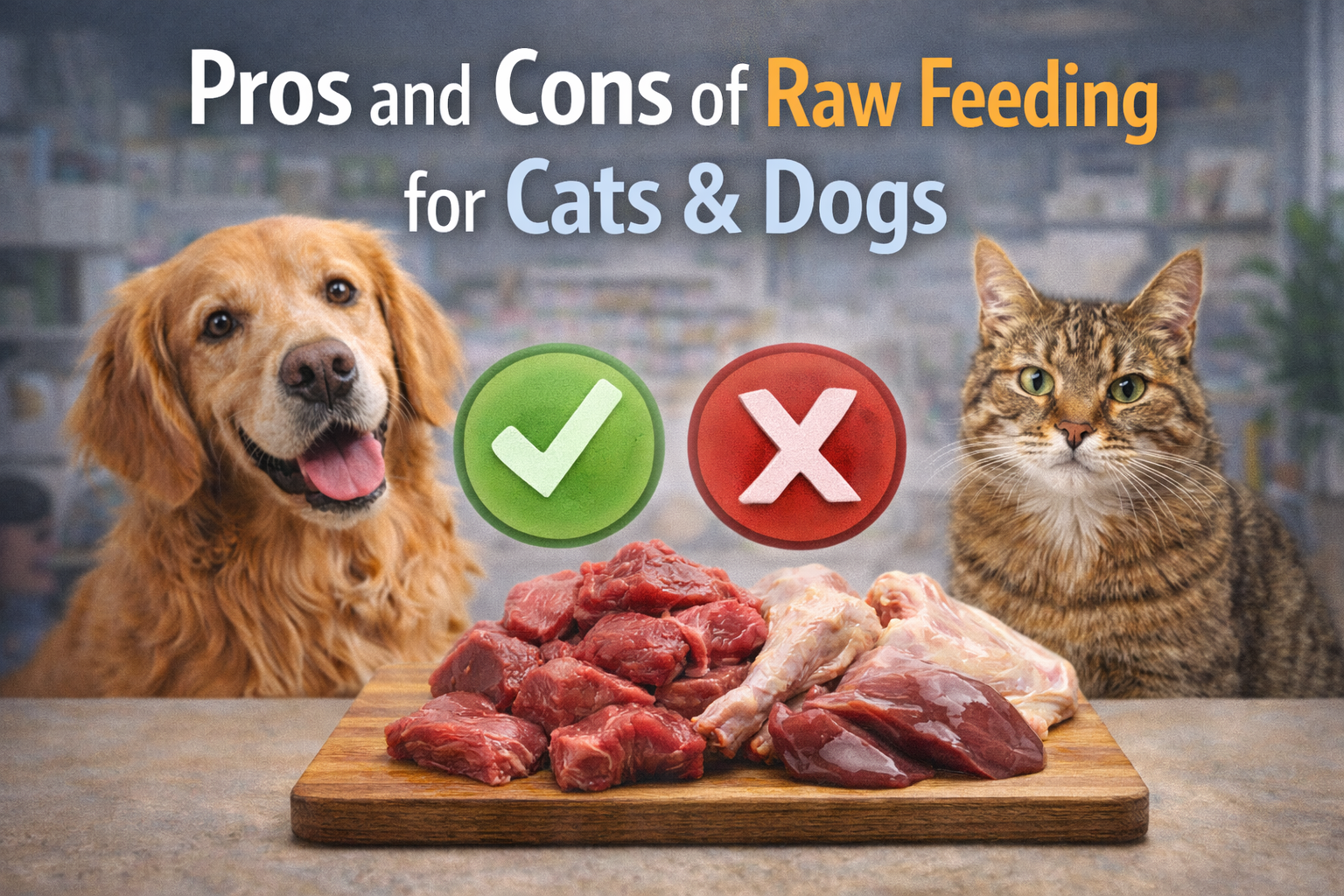

Pros of Raw Feeding for Cats and Dogs
1. Fewer Artificial Ingredients
Raw feeding for cats and dogs has become increasingly popular among pet owners seeking a more natural diet. When considering raw feeding for cats and dogs, safety and nutritional balance are essential.
2. Improved Coat and Skin Health
Some pets experience shinier coats and healthier skin due to higher levels of natural fats and oils in raw diets.
3. Potential Digestive Benefits
Raw diets can be easier for some pets to digest, often resulting in:
- Smaller stools
- Less odour
- Improved stool consistency
4. Dental Health Support
Chewing raw meaty bones may help reduce plaque and tartar buildup in dogs (under supervision and with vet guidance).
Cons of Raw Feeding for Cats and Dogs
1. Risk of Bacterial Contamination
Raw meat can carry bacteria such as Salmonella or E. coli, which can affect pets and humans — especially children, elderly individuals, or immunocompromised people.
2. Nutritional Imbalances
Home-prepared raw diets are commonly unbalanced. Deficiencies or excesses in calcium, phosphorus, vitamins, or taurine (especially for cats) can lead to serious long-term health issues. The risks of raw feeding for cats and dogs are often linked to improper preparation.
3. Choking or Injury Risk
Feeding bones carries a risk of:
- Choking
- Tooth fractures
- Gastrointestinal blockages
4. Not Suitable for Every Pet
Raw feeding may not be appropriate for:
- Puppies and kittens
- Pregnant animals
- Pets with weakened immune systems
- Pets with certain medical conditions
Not every pet will thrive on raw feeding for cats and dogs, particularly those with medical conditions.
Is Raw Feeding Better for Cats or Dogs?
Cats are obligate carnivores, meaning they require animal protein to survive, which can make raw diets appealing. However, cats are particularly vulnerable to nutritional deficiencies if diets are not carefully balanced.
Dogs are omnivores, meaning they can thrive on a wider range of diets — including high-quality commercial foods.
In both cases, diet balance is more important than diet type.
Should You Feed a Raw Diet?
There is no one-size-fits-all answer. Some pets do well on raw diets, while others thrive on high-quality commercial foods. The key is ensuring your pet receives complete and balanced nutrition.
Important Safety Considerations for Raw Feeding
When exploring raw feeding for cats and dogs, hygiene and preparation play a crucial role in reducing risks. Raw meat must be handled carefully to avoid cross-contamination within the household. Bowls, preparation surfaces, and utensils should be cleaned thoroughly after each use.
Commercially prepared raw diets that meet recognised nutritional standards may be safer than homemade diets, particularly for owners new to raw feeding. These diets are formulated to provide balanced levels of essential nutrients such as calcium, phosphorus, and taurine.
Pets on raw diets should also be monitored closely for changes in weight, digestion, coat condition, and overall health. Regular veterinary check-ups are essential to ensure the diet continues to meet the pet’s nutritional needs.
Before switching to raw feeding:
- Speak to your veterinary surgeon or veterinary nurse
- Avoid copying diets found online without professional guidance
- Consider commercially prepared raw diets that meet recognised nutritional standards
Monitoring Your Pet on a Raw Diet
When introducing raw feeding for cats and dogs, it’s important to monitor your pet closely. Watch for changes in appetite, weight, stool quality, and energy levels. Any vomiting, diarrhoea, or behavioural changes should prompt a review of the diet with your veterinary team to ensure ongoing safety and balance.
Final Thoughts
Raw feeding can offer benefits, but it also carries real risks if done incorrectly. A healthy pet diet should always be balanced, safe, and tailored to the individual animal.
If you’re unsure, your veterinary team can help you decide what feeding option best suits your pet’s lifestyle, age, and health needs.
Useful links:
Organisations such as the British Veterinary Association advise caution when considering raw feeding for cats and dogs.
RSPCA raw feeding advice
British Veterinary Association nutrition guidance



Leave a Reply