
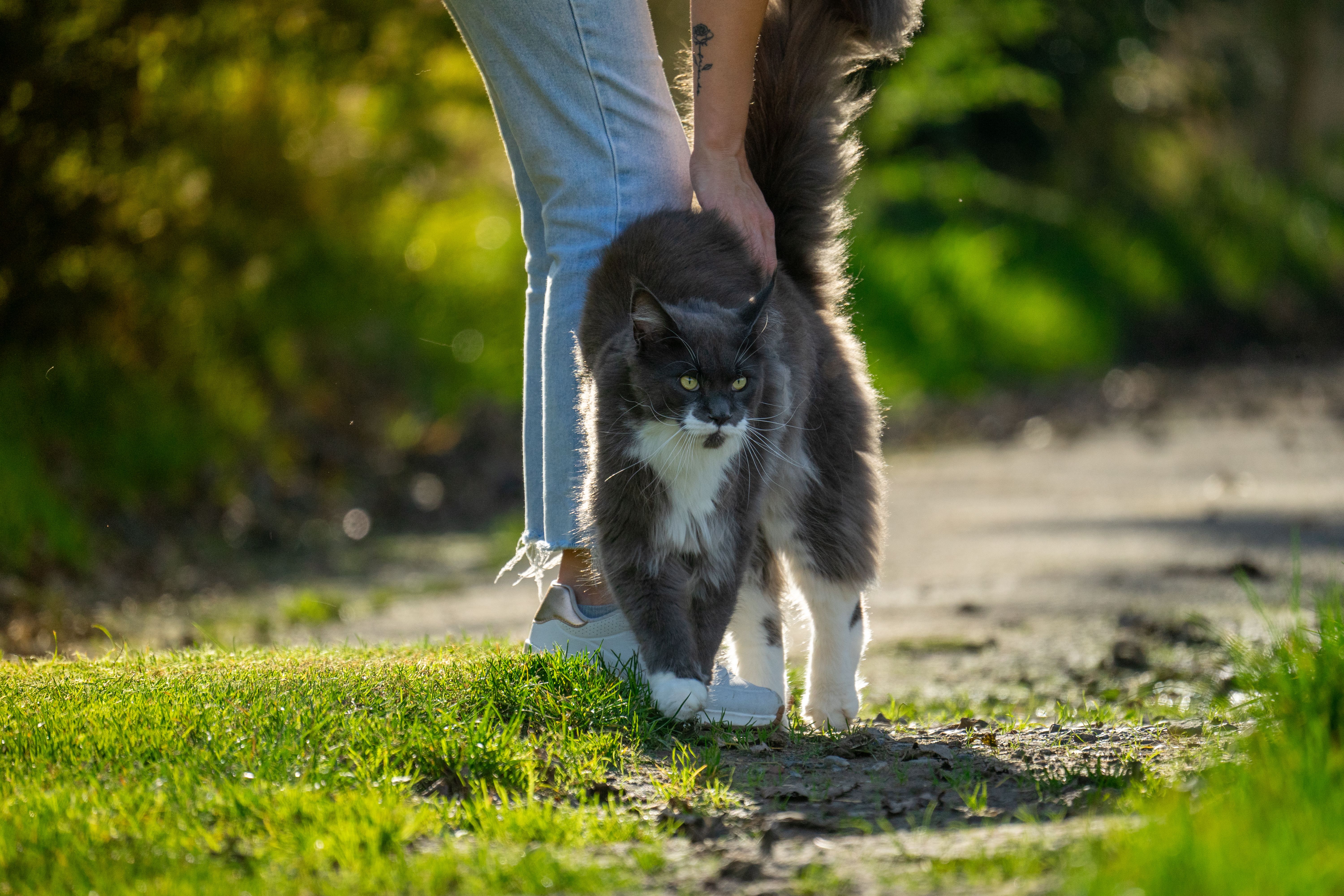

You’ve got a cat.
You also apparently have a tiny, furry personal assistant.
You go to the kitchen.
They’re there.
You go upstairs.
They’re behind you.
You go to the bathroom.
Suddenly, you have an audience.
You may have started wondering:
Why does my cat follow me everywhere?
As a veterinary nurse, this is something owners ask about surprisingly often. And thankfully, most of the time, your cat isn’t following you because they’re plotting your downfall.
There are actually several reasons why cats follow their owners around.
Has your cat suddenly become clingy too? Read our post Why Is My Cat So Clingy? 9 Unexpected Reasons Explained
1. They like you
Let’s start with the nicest explanation.
Your cat may simply enjoy your company.
Cats form strong social bonds with people, and some cats are considerably more people-oriented than others.
While one cat may happily spend six hours asleep on the sofa, another may want to know exactly where their human is at all times.
Following you around can be a way of maintaining social contact.
Your cat may sit near you, rub against you, follow you between rooms or settle down beside you.
Basically, you’ve become their favourite colleague.
And unlike most colleagues, you provide food.
2. You’re associated with good things
Your cat has probably worked out that you’re useful.
You provide:
- Food
- Water
- Treats
- Play
- Affection
- Warm laps
- Access to doors
- Entertainment
So when you get up and walk towards the kitchen, your cat might think:
“Excellent. We’re going to the food room.”
You, meanwhile, are just making a cup of tea.
This is particularly common around mealtimes.
Cats are creatures of routine, and if your cat has learned that certain times of day usually involve food, they’ll quickly become very interested in your movements.
3. They’re curious
Cats are naturally curious animals.
If you suddenly stand up and walk into another room, you’ve changed the environment.
And your cat wants to know why.
What’s happening?
Where are you going?
Is there food?
Has something interesting appeared?
Are you opening a cupboard?
Could there possibly be a cardboard box involved?
Your cat may simply be investigating.
This is especially common in younger cats, who often have enormous amounts of curiosity and energy.
4. They’re bored
Sometimes following you around is your cat’s way of saying:
“Can we PLEASE do something?”
Indoor cats need mental and physical stimulation.
If there’s very little happening in their environment, you may become the most interesting thing available.
Consider whether your cat has opportunities for:
- Play
- Climbing
- Scratching
- Exploring
- Hunting-type activities
- Food puzzles
- Watching the outside world
You don’t necessarily need to spend a fortune.
A cardboard box can provide approximately 700 times more entertainment than the expensive toy you bought specifically for them.
5. They want something
Cats don’t always follow you for companionship.
Sometimes they have a request.
And they may be very persistent about making that request known.
Perhaps the water bowl is empty.
Maybe the litter tray needs cleaning.
Perhaps they want their dinner.
Maybe they’ve brought you a toy and are expecting you to participate in the hunting expedition.
Watch what happens when your cat follows you.
Do they lead you somewhere?
Meow at you?
Sit beside their food bowl?
Stand beside the door?
These behaviours can give you clues about what they’re asking for.
6. They’re looking for reassurance
Some cats follow their owners because they feel safest around them.
This can happen when a cat is nervous, stressed or unsettled.
If your cat follows you more closely during stressful situations, they may be using you as a source of reassurance.
For example, your cat might become more attached during:
- House moves
- Building work
- Fireworks
- Visitors
- Introduction of another pet
- Changes to your routine
If the behaviour is sudden, think about what has changed.
7. They’re experiencing separation anxiety
Cats can form strong attachments to their owners, and some can struggle when left alone.
A cat with separation-related problems may become particularly focused on their owner.
You might notice:
- Excessive vocalisation when you’re preparing to leave
- Destructive behaviour
- Toileting outside the litter tray
- Excessive grooming
- Restlessness
- Increased clinginess
- Distress when you leave
Following you around alone doesn’t mean your cat has separation anxiety.
Look for a pattern of behaviours rather than one isolated sign.
If you’re concerned, speak to your veterinary practice.
8. They could be unwell
This is another reason not to ignore a sudden change.
If your cat has suddenly started following you everywhere when they previously enjoyed plenty of independent time, consider whether anything else has changed.
Cats can behave differently when they’re unwell or in pain.
You might also notice:
- Appetite changes
- Weight loss
- Increased drinking
- Changes in toileting
- Vomiting
- Diarrhoea
- Reduced grooming
- Sleeping more
- Reduced mobility
- Increased vocalisation
Cats are incredibly good at hiding illness, so behavioural changes can sometimes be one of the first things an owner notices.
9. They’ve trained you
Yes.
You may have been trained by your cat.
Perhaps every time they follow you into the kitchen, you give them a treat.
Perhaps they meow and you immediately open the door.
Perhaps they climb onto your lap and receive five minutes of fuss.
Your cat has learned that following you produces desirable results.
And congratulations.
You’ve successfully created a system of positive reinforcement.
Your cat probably doesn’t understand behavioural science.
They just understand that following the human works.
Why does my cat follow me to the bathroom?
This deserves its own section because apparently privacy is not a right when you own a cat.
There are a few possible reasons.
Your bathroom may be interesting because it contains running water, unusual smells and surfaces that provide interesting sensory experiences.
Your cat may also simply be following you because… you’re going somewhere.
Some cats also learn that bathroom time is a predictable opportunity for attention.
And if you’ve ever shut the door while your cat is outside, you’ve probably discovered just how strongly some cats believe bathrooms should be communal spaces.
Should I stop my cat following me?
Not necessarily.
If your cat is healthy, relaxed and simply enjoys being around you, there’s no reason to stop them.
In fact, the bond between a cat and their owner is one of the lovely things about living with a pet.
The important thing is to look for changes.
A cat who has always followed you everywhere is very different from a cat who has suddenly become unusually attached.
How can I encourage more independence?
If your cat constantly demands attention, make sure they have things they can do without you.
Try:
Create vertical space
Cat trees, shelves and window perches give cats opportunities to climb and observe their surroundings.
Use puzzle feeders
These can encourage natural foraging behaviours and provide mental stimulation.
Schedule playtime
Short, regular play sessions can help prevent boredom.
Provide hiding places
Cats benefit from having safe places where they can retreat.
Rotate toys
You don’t need to leave every toy available all the time.
Put some away and bring them back later.
Suddenly, the toy they’ve ignored for three months is apparently the greatest invention in human history.
When should I contact my vet?
If following you everywhere is a new behaviour, particularly if it’s accompanied by other changes, speak to your vet.
Your veterinary team can help determine whether the behaviour is likely to be behavioural, environmental or potentially related to an underlying health problem.
The bottom line
So, why does my cat follow me everywhere?
They might love your company.
They might be curious.
They might be bored.
They might want something.
They might have learned that you’re basically a walking vending machine.
Or they may be looking for reassurance.
Most importantly, consider what’s normal for your individual cat.
If they’ve always been your furry little shadow and they’re otherwise happy and healthy, you probably don’t need to worry.
If your independent cat has suddenly transformed into your permanent sidekick, however, take notice.
Because with cats, a change in behaviour can sometimes be their way of telling us that something has changed — even if they haven’t quite mastered the art of sending a WhatsApp message.



Leave a Reply