
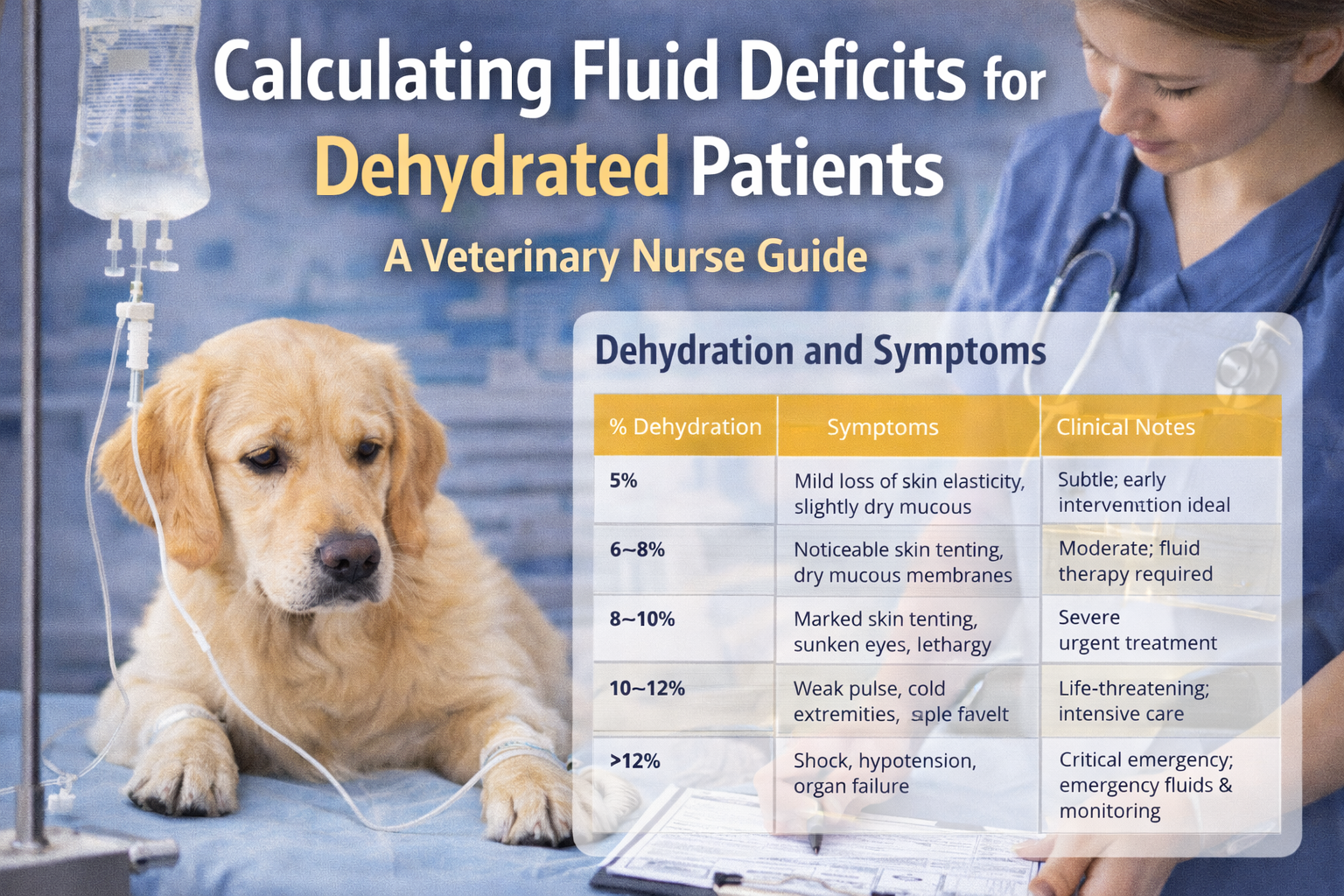

Fluid deficit calculation in veterinary patients is a core clinical skill for veterinary nurses. Dehydration is a common problem in practice, and accurate assessment of fluid deficits is essential for safe and effective patient care. This guide explains how to estimate fluid deficits, includes a dehydration symptoms table, and provides practical tips for everyday nursing practice.
Why Fluid Deficit Calculation in Veterinary Patients Matters
Fluid therapy is a cornerstone of treatment for many sick animals, including those with:
- Vomiting or diarrhoea
- Kidney disease
- Shock
- Trauma or burns
Underestimating fluid requirements can prolong recovery or worsen dehydration, while overestimating can lead to fluid overload and complications.
Why Accurate Fluid Deficit Calculation Is Critical in Nursing Care
Accurate fluid deficit calculation in veterinary patients helps prevent complications such as fluid overload, electrolyte imbalance, and delayed recovery. Veterinary nurses play a key role in monitoring hydration status, adjusting fluid plans, and identifying early signs of deterioration. Clear documentation and frequent reassessment are essential, particularly in critical or hospitalised patients.
Step 1: Assess Dehydration in Veterinary Patients
The first step is a clinical assessment of the patient. Look for:
- Skin tenting
- Dry or tacky mucous membranes
- Sunken eyes
- Weak pulse
- Lethargy
Dehydration Severity and Clinical Signs: Fluid Deficit Calculation in Veterinary Patients
| % Dehydration | Common Symptoms | Notes |
|---|---|---|
| 5% | Mild loss of skin elasticity, slightly dry mucous membranes | Often subtle; may be seen in early illness |
| 6–8% | Noticeable skin tenting, dry mucous membranes, mild depression | Moderate dehydration; requires fluid therapy |
| 8–10% | Marked skin tenting, dry sticky mucous membranes, sunken eyes, lethargy | Severe dehydration; urgent treatment required |
| 10–12% | Very weak, cold extremities, rapid heart rate, collapse possible | Life-threatening; intensive fluid therapy needed |
| >12% | Shock, severe hypotension, organ failure | Emergency; critical care intervention |
Step 2: Fluid Deficit Calculation in Veterinary Patients
Use this simple formula:
Fluid Deficit (litres) = Body Weight (kg) × % Dehydration ÷ 100
Example:
A 10 kg dog assessed at 8% dehydration:
10 × 8 ÷ 100 = 0.8 L fluid deficit
Step 3: Add Maintenance Requirements
Patients also need maintenance fluids to support normal bodily functions:
- Dogs: ~60 mL/kg/day
- Cats: ~50 mL/kg/day
Example:
10 kg dog maintenance:
10 × 60 = 600 mL/day
Total daily fluid requirement:
0.8 L deficit + 0.6 L maintenance = 1.4 L/day
Accounting for Ongoing Fluid Losses in Veterinary Patients
When performing fluid deficit calculation in veterinary patients, it is essential to account for ongoing losses in addition to the initial deficit and maintenance requirements. Ongoing losses may include continued vomiting, diarrhoea, polyuria, wound drainage, or blood loss. These losses should be estimated and added to the fluid plan, then reassessed frequently. Veterinary nurses play a vital role in measuring and recording these losses accurately, as failure to replace them can result in persistent dehydration despite appropriate initial fluid therapy.
Step 4: Determine Fluid Type and Rate
- Crystalloids (e.g., Hartmann’s, 0.9% saline) are commonly used.
- Rate adjustments may be required for:
- Cardiac disease
- Kidney disease
- Severe dehydration
Tip: Always calculate shock fluids separately if patient is in hypovolemic shock.
Step 5: Reassess Regularly
- Monitor weight, mucous membranes, skin turgor, urine output, and vital signs.
- Adjust fluids based on response to therapy.
- Remember: “Two or three times maintenance” may be higher than deficit alone — clinical judgement is key.
Common Pitfalls for Vet Nurses
- Forgetting to convert % dehydration to decimal
- Ignoring maintenance requirements
- Not adjusting for ongoing losses (vomiting, diarrhoea, blood loss)
- Overloading patients with too rapid fluid rates
Quick Reference Table: Dehydration and Symptoms
| % Dehydration | Symptoms | Clinical Notes |
|---|---|---|
| 5% | Mild loss of skin elasticity, slightly dry mucous membranes | Subtle; early intervention ideal |
| 6–8% | Noticeable skin tenting, dry mucous membranes, mild depression | Moderate; fluid therapy required |
| 8–10% | Marked skin tenting, sunken eyes, lethargy | Severe; urgent treatment |
| 10–12% | Weak pulse, cold extremities, collapse possible | Life-threatening; intensive care |
| >12% | Shock, hypotension, organ failure | Critical emergency; emergency fluids & monitoring |
Final Thoughts
Calculating fluid deficits is essential knowledge for every veterinary nurse. Accurate assessment, correct calculations, and ongoing monitoring can mean the difference between recovery and complications in dehydrated patients.
Always consult with the supervising veterinary surgeon when administering IV fluids.
Useful Links:
📘 Veterinary Fluid Therapy Guidelines
✅ AAHA 2024 Fluid Therapy Guidelines for Dogs and Cats
Detailed official guidelines on fluid therapy basics, calculating deficits, ongoing losses, and administration strategies.
🔗 https://www.aaha.org/resources/2024-aaha-fluid-therapy-guidelines-for-dogs-and-cats/section-3-fluids-for-replacement-and-maintenance/
🐶 Clinical Fluid Therapy Considerations
✅ Fluid Therapy in Hospitalised Patients – covers calculation of dehydration, maintenance & ongoing losses.
🔗 https://todaysveterinarypractice.com/internal-medicine/fluid-therapy-patient-assessment-and-fluid-choices/
📚 Maintenance & Deficit Details
✅ MSD Veterinary Manual – Maintenance Fluid Plan in Animals
Authoritative overview of fluid therapy principles and maintenance calculations.
🔗 https://www.msdvetmanual.com/therapeutics/fluid-therapy/maintenance-fluid-plan-in-animals



Leave a Reply