
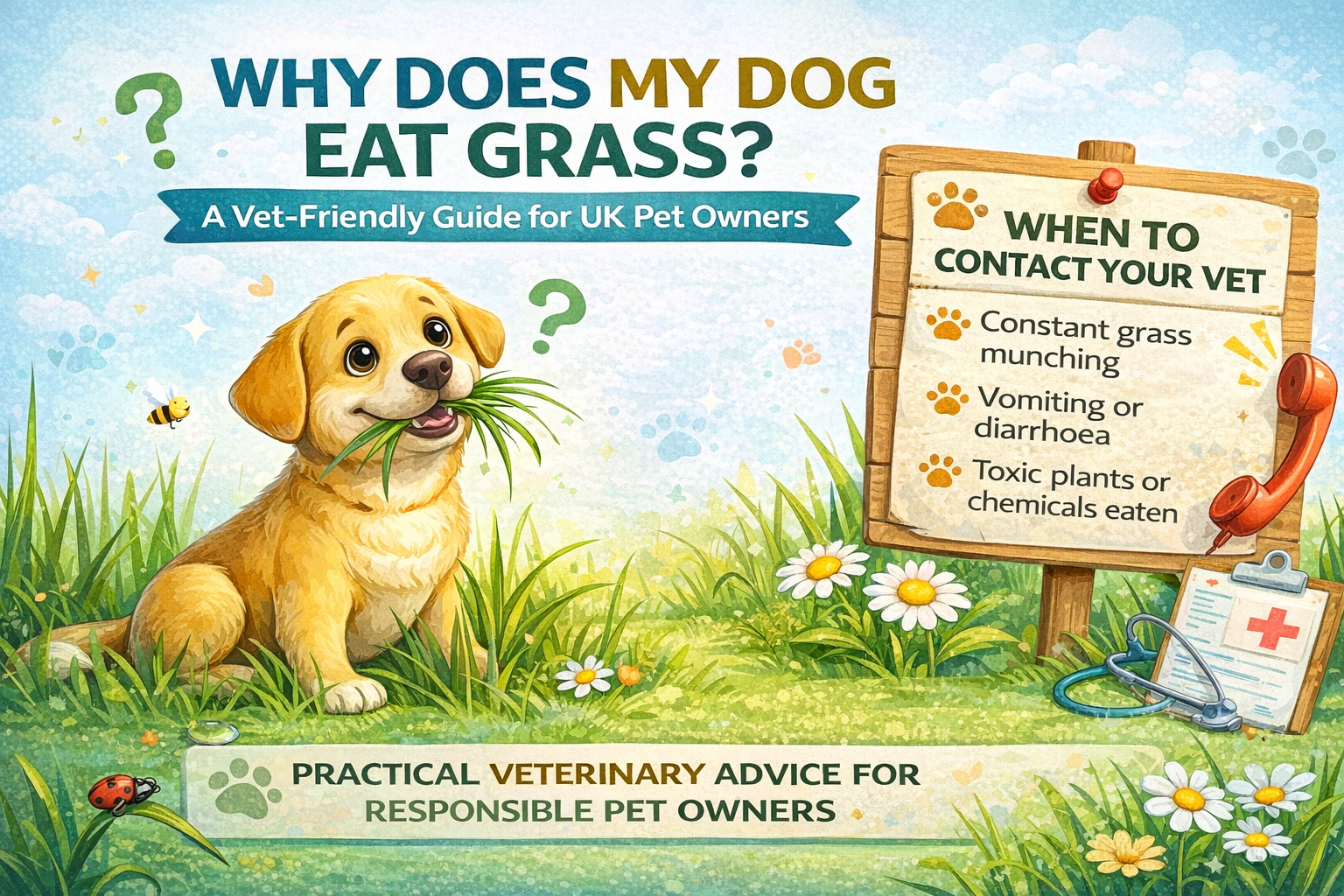

Why does my dog eat grass is one of the most common questions UK pet owners ask. Most of the time it’s normal, but there are situations where veterinary advice is recommended.
Many pet owners wonder why does my dog eat grass and whether it’s something to be concerned about. This guide breaks it down with clear, specific advice based on veterinary understanding.
Is It Normal for Dogs to Eat Grass?
Yes — in most cases, it’s completely normal behaviour. Veterinary research sheds light on why does my dog eat grass, showing that it is often normal behaviour.
Many dogs nibble grass, especially:
- During or after walks in parks or fields
- When bored or seeking extra fibre
- Simply because they like the texture or taste
Even though dogs are primarily carnivores, grass‑eating isn’t unusual. It’s something that has been observed in dogs for generations.
Common Reasons Dogs Eat Grass
Veterinary guidance on why does my dog eat grass helps owners distinguish normal behaviour from signs of digestive upset.
1. Instinctive Behaviour
Dogs have inherited some behaviours from their ancestors. Wild canids sometimes eat plant material, and domestic dogs may still show this instinct.
2. Digestive Upset
Some dogs eat grass if they have a mild stomach upset. Grass may make them vomit, which can relieve discomfort.
3. Boredom or Habit
Dogs with lots of free time or not enough mental stimulation sometimes chew grass as a distraction activity.
4. Nutrition or Fibre
A small proportion of dogs may be trying to increase their fibre intake. Grass has roughage that can help bowels move.
Should You Let Your Dog Eat Grass?
In most cases, occasional grass eating is harmless, but there are some caveats:
✔ Safe when:
- It’s in small amounts
- Your dog is otherwise healthy and active
- There are no chemical sprays or fertilisers on the grass
⚠ Be careful if:
- The grass has been treated with pesticides, slug pellets, fertiliser, or herbicides
- Your dog eats grass constantly
- It is followed by repeated vomiting or diarrhoea
If you notice changes in behaviour, it’s important to consider why your dog eats grass and whether a vet visit is needed.
Should You Worry About Why Your Dog Eats Grass?
Understanding why does my dog eat grass can help you make safe choices and avoid unnecessary worry.
If grass‑eating is accompanied by any of the following, it’s time to seek veterinary advice:
- Persistent vomiting
- Diarrhoea
- Lethargy or weakness
- Loss of appetite
- Weight loss
- Unusual behaviour changes
These signs may indicate an underlying health issue that needs attention.
How to Safely Manage Grass Eating
Provide plenty of stimulation
- Walks, play sessions, puzzle toys
- Mental enrichment reduces boredom behaviour
Check your grass areas
- Keep dogs off grass that may have been treated with chemicals
- If you grow lawn treats at home, avoid fertilisers that are toxic to pets
Offer balanced nutrition
- A high‑quality complete dog food with sufficient fibre may reduce grass grazing
If you’re unsure about your dog’s diet, speak to your vet nurse or veterinary surgeon for personalised advice.
When to Contact Your Vet in the UK
You should call your veterinary practice if:
- Grass‑eating is frequent or compulsive
- Your dog shows additional symptoms listed above
- You suspect they’ve eaten toxic plants or chemicals
If your practice offers out‑of‑hours support or you’re unsure after hours, consider contacting a UK pet poison helpline or an emergency veterinary hospital.
Final Thoughts
Grass‑eating in dogs is usually normal and harmless, but understanding why it happens and when it can be a sign of something more serious helps you be a more confident pet owner.
Stay observant, keep their environment safe, and don’t hesitate to contact your veterinary team if you’re ever unsure — that’s always the best approach.
🐾 Got more pet behaviour questions? Check out our blog archive for answers and tips for both dog and cat owners.
Useful links:
Pet Poison Helpline (UK)
https://www.petpoisonhelpline.com/
Royal College of Veterinary Surgeons (RCVS)
https://www.rcvs.org.uk/
British Veterinary Nursing Association (BVNA)
https://bvna.org.uk/
Dogs Trust – Grass Eating & Dog Behaviour
https://www.dogstrust.org.uk/help-advice/behaviour/why-dogs-eat-grass



Leave a Reply