


Introduction
Taking a cat’s blood pressure is an important veterinary nursing skill, particularly when caring for older cats and patients with conditions such as chronic kidney disease, hyperthyroidism or cardiovascular disease.
However, obtaining a reliable blood pressure reading in cats isn’t simply a case of placing a cuff on the limb and pressing a button. Patient stress, cuff size, positioning, equipment and operator technique can all influence the result.
In this guide, we’ll walk through how to take blood pressure in cats step by step, including:
- The equipment you need
- How to choose and position the cuff
- How to use a Doppler blood pressure monitor
- How to use an oscillometric monitor
- How many readings to take
- How to interpret systolic blood pressure
- Common mistakes that can affect your results
- When an elevated or low reading should be escalated to the veterinary surgeon
Quick answer: Doppler and high-definition oscillometric techniques are among the most reliable non-invasive methods for measuring blood pressure in conscious cats. Obtaining several consistent readings using a standardised technique is important because feline blood pressure can be significantly affected by stress and other environmental factors.
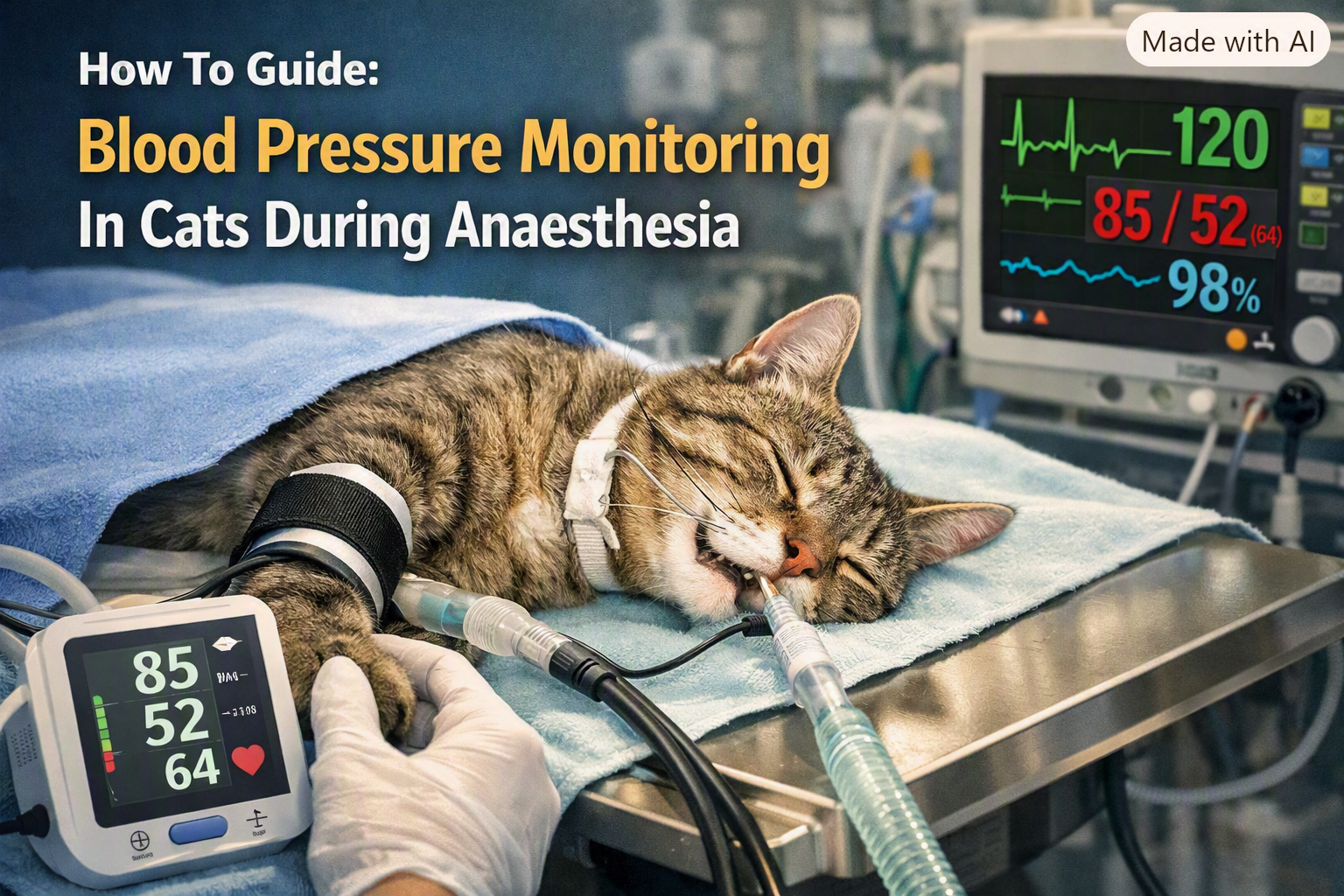
If you’re wanting a more in-depth guide to monitoring blood pressure during anaesthesia, we recommend our blog How To Guide: Blood Pressure Monitoring In Cats During Anaesthesia – Paws and Pet Hub
Why Blood Pressure in Dogs and Cats Matters
Blood pressure reflects the force of blood against the arterial walls. Changes can indicate:
- Hypertension (common in older cats with renal or endocrine issues)
- Hypotension (often seen during anaesthesia or in shock)
- Cardiac disease
- Pain and stress responses
Routine monitoring ensures early detection and intervention, improving patient outcomes.
Equipment You’ll Need
Recommended Devices
- Doppler flow monitor (excellent for small animals)
- Oscillometric monitor (automated and user‑friendly)
Accessories
- Appropriately sized cuff
- Acoustic gel (for Doppler probe)
- Quiet, calm environment
- Assistant to help restrain if needed
Tip: Cuff size matters — it should be ~30–40% of limb circumference.
Step‑by‑Step Procedure for measuring blood pressure in dogs and cats
1. Prepare the Patient
- Allow the patient to acclimate quietly for several minutes
- Position in lateral or sternal recumbency
- Clip a small area of fur if signal is weak
2. Select and Position the Cuff
- Place cuff on a forelimb distal to elbow, or hindlimb just above the hock
- Ensure snug but not tight fit
3. Using a Doppler for blood pressure in dogs and cats
- Apply gel and place probe distal to cuff
- Inflate cuff until pulse sound stops
- Slowly deflate until sound returns — this is the systolic reading
4. Using an Oscillometric Device
- Ensure cuff and limb are at heart level
- Allow device to cycle fully
- Read systolic, diastolic, and mean arterial pressure (MAP)
What is a normal blood pressure in a cat?
| Species | Systolic (mmHg) | Diastolic (mmHg) | MAP (mmHg) |
|---|---|---|---|
| Dog | 110–160 | 60–100 | 60–120 |
| Cat | 120–160 | 60–100 | 60–120 |
Note: Values vary with stress, pain, and technique — always interpret in context.
A cat’s blood pressure should always be interpreted in the context of the individual patient, rather than relying on a single “normal” value. Systolic blood pressure (SBP) is particularly useful when assessing the risk of hypertension and potential target organ damage.
In general, an SBP below 150 mmHg is associated with minimal risk, while persistent readings of 160 mmHg or above are increasingly concerning. Blood pressure can also be temporarily elevated by stress, anxiety, pain or the veterinary environment, so consistent technique and repeated measurements are important before drawing conclusions from a reading.
| Systolic BP | Category | Risk of target organ damage |
|---|---|---|
| <150 mmHg | Normotensive | Minimal |
| 150–159 mmHg | Borderline/mild | Low |
| 160–179 mmHg | Hypertensive | Moderate |
| ≥180 mmHg | Severely hypertensive | High |
Blood pressure can have a direct link to dehydration and fluid deficits. If you’re interested, take a further read here: Fluid Deficit Calculation in Veterinary Patients: A Simple 5-Step Guide for Vet Nurses – Paws and Pet Hub
How Many Blood Pressure Readings Should You Take in a Cat?
Taking a single blood pressure reading may not give an accurate representation of a cat’s true blood pressure, particularly if the patient is nervous or unsettled in the veterinary environment. Allow the cat time to acclimatise before starting and aim to obtain several consistent measurements rather than relying on one reading.
Take multiple readings during the same session, allowing the patient to remain calm and as still as possible between measurements. The first reading may be higher because of the initial stress of handling, so it can be appropriate to disregard an obviously elevated first reading when calculating the overall result.
Ideally, record the individual readings and look for a consistent pattern. If readings vary considerably, reassess the patient’s positioning, cuff placement and equipment before interpreting the result. Persistent or repeated elevations are more clinically significant than a single high reading.
Documenting the blood pressure
Good documentation is an important part of blood pressure monitoring. Record:
- Systolic blood pressure (SBP) and, where available, diastolic blood pressure (DBP) and MAP
- The device used, such as Doppler or oscillometric monitor
- Cuff size
- Limb or tail used
- Patient position
- The number of readings taken
- Any factors that may have affected the result, such as stress, movement or vocalisation
Recording these details allows subsequent readings to be compared using a consistent technique and makes it easier to identify genuine trends over time.
Common Errors and How to Avoid Them
- Incorrect cuff size: Leads to falsely high or low readings
➤ Always use the right cuff width - Patient stress or movement: Can spike values
➤ Calm the animal, take multiple readings - Poor probe placement: Weak signal
➤ Adjust limb and clip more fur if needed
Tips for Accurate Blood Pressure in Dogs and Cats
Accurate blood pressure measurement in dogs and cats requires more than simply placing a cuff and reading a number – it demands a thorough understanding of the patient’s physiology, behaviour, and the factors that can influence readings.
One of the first considerations is patient preparation. Animals that are stressed, anxious, or in pain can exhibit significantly elevated readings, known as “white coat hypertension,” which may lead to misdiagnosis.
Allowing patients to acclimate to the clinic environment, handling them gently, and providing a quiet, calm space can markedly improve the reliability of measurements. Additionally, the choice of equipment plays a crucial role. Doppler devices are often preferred in smaller patients or those with weak arterial pulses, as they provide a reliable systolic reading.
Oscillometric monitors, while automated and easy to use, can sometimes give inaccurate results in cats, small dogs, or patients with arrhythmias, so it is essential to understand the limitations of each device. Proper cuff selection and placement are also critical; a cuff that is too small can result in falsely high readings, while a cuff that is too large can give falsely low values.
For forelimb measurements, the cuff should be placed just above the carpus, and for hindlimbs, just above the hock, ensuring the limb is at heart level to reduce hydrostatic pressure errors. Multiple readings should be taken, ideally three to five measurements, with the first reading often discarded to allow for patient acclimation.
The mean of the subsequent readings provides a more accurate reflection of the true blood pressure. Interpreting these results requires context, as normal ranges can vary with age, breed, activity level, and concurrent conditions such as chronic kidney disease, hyperthyroidism, or cardiovascular disease. Veterinary nurses must also document readings meticulously, including the device used, cuff size, limb measured, patient position, and behaviour, to enable trend monitoring over time.
Recognising abnormal trends—whether persistent hypertension or hypotension—allows timely communication with the veterinarian and initiation of appropriate interventions, whether adjusting fluid therapy, modifying anaesthetic protocols, or recommending further diagnostics.
By integrating patient handling, correct equipment use, and careful interpretation, veterinary nurses enhance the quality of care and support optimal patient outcomes.
Regular practice and ongoing professional development in blood pressure monitoring further build confidence and competence, ensuring that nurses are not only measuring numbers but providing meaningful data that informs treatment and improves patient safety.
Interpreting Results and Clinical Actions
Interpreting a cat’s blood pressure involves more than looking at a single number. The result should be considered alongside the patient’s clinical history, current condition, behaviour during measurement and any evidence of underlying disease or target organ damage.
Systolic blood pressure (SBP)
As a general guide:
- <150 mmHg: Minimal risk of target organ damage.
- 150–159 mmHg: Mild or borderline elevation; consider the patient’s circumstances and repeat measurements where appropriate.
- 160–179 mmHg: Hypertensive range, with an increased risk of target organ damage. Persistent readings should be discussed with the veterinary surgeon and investigated in the context of the patient.
- ≥180 mmHg: Severe hypertension, associated with a high risk of target organ damage and requiring prompt veterinary assessment.
A single elevated reading does not necessarily mean that a cat has persistent hypertension. Stress, anxiety and the clinical environment can significantly increase blood pressure, so repeated measurements using a consistent technique are important.
What is target organ damage?
Persistently high blood pressure can damage organs that are particularly sensitive to changes in blood pressure. In cats, the eyes, brain, kidneys and cardiovascular system are important target organs.
For more information on target organ damage, we recommend reading our blog Feline Hypertension: Target Organ Damage in Cats Explained
Veterinary nurses should be alert for relevant clinical signs and communicate abnormal or persistent readings to the veterinary surgeon. Further investigation may be indicated, particularly in cats with conditions commonly associated with hypertension, such as chronic kidney disease or hyperthyroidism.
Hypotension
Low blood pressure is particularly important in anaesthetised, critically ill or hospitalised patients because inadequate blood pressure can compromise tissue perfusion.
A MAP below approximately 60 mmHg is generally considered concerning during anaesthesia and should prompt assessment of the patient’s cardiovascular status, anaesthetic depth and circulating volume. The appropriate intervention will depend on the underlying cause and may include adjusting anaesthetic agents, fluid therapy or other cardiovascular support under veterinary direction.
Remember: trends matter
Blood pressure should always be interpreted as part of the wider clinical picture. Recording individual readings, patient behaviour, cuff size, measurement site, patient position and equipment used allows the veterinary team to identify genuine changes over time rather than reacting to an isolated abnormal result.
Read also: Pyometra Dog Treatment: A Guide for RVNs
Frequently Asked Questions About Blood Pressure in Cats
What is a normal blood pressure for a cat?
A cat’s blood pressure should be interpreted in the context of the individual patient rather than against one fixed “normal” value. Systolic blood pressure (SBP) below 150 mmHg is generally associated with minimal risk of target organ damage, while persistent readings of 160 mmHg or above are increasingly concerning. Stress and anxiety can temporarily increase a cat’s blood pressure, so repeated measurements using a consistent technique are important.
What blood pressure is considered high in a cat?
An SBP of 160 mmHg or above is considered hypertensive, although the significance depends on whether the elevation is persistent and whether there is evidence of target organ damage. Readings of 180 mmHg or higher are associated with a high risk of target organ damage and should be promptly assessed by the veterinary surgeon.
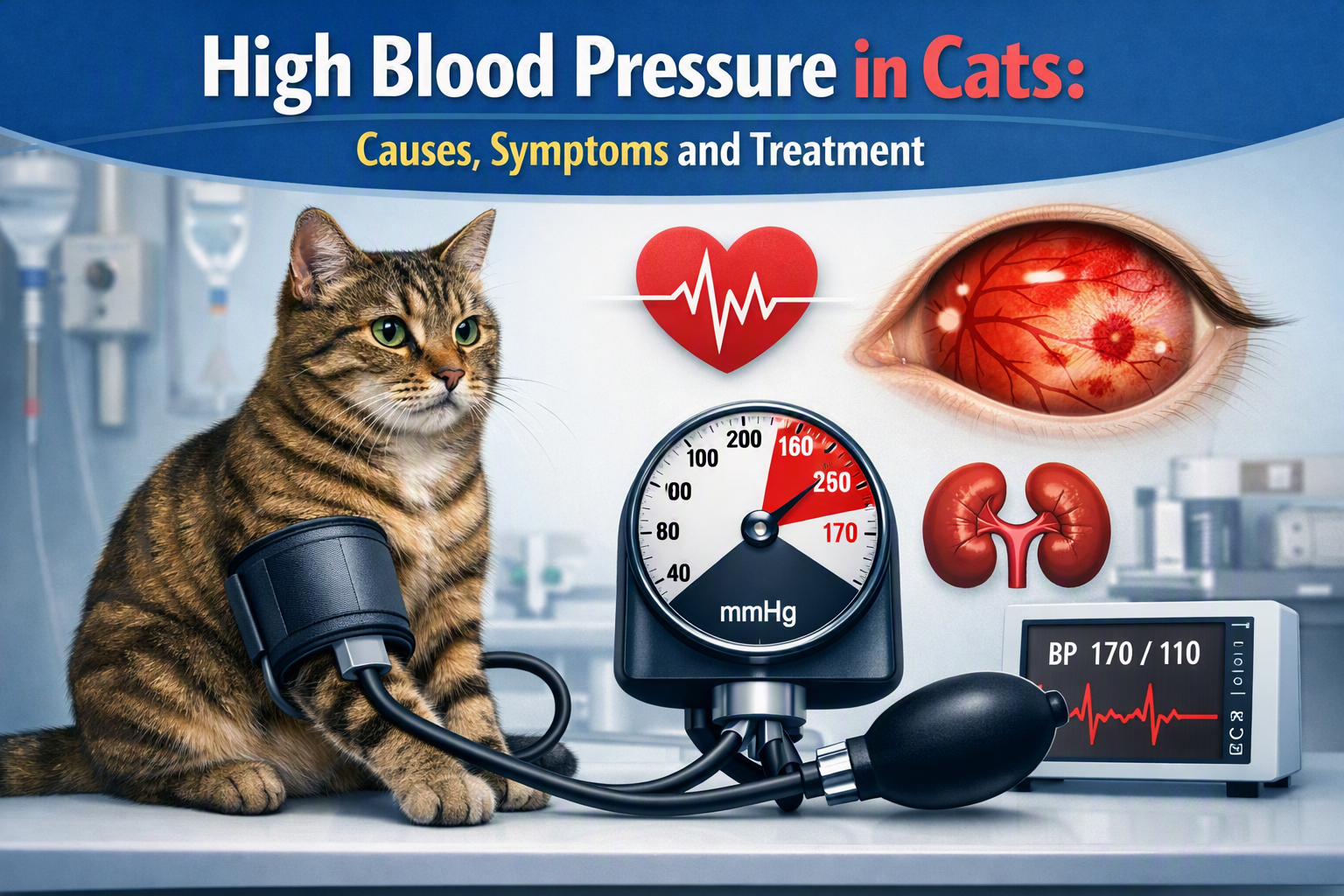
We recommend taking a look at our blog High Blood Pressure in Cats: Causes, Symptoms and Treatment – Paws and Pet Hub to look at hypertension more.
Where should a blood pressure cuff be placed on a cat?
A blood pressure cuff can be placed around a forelimb, hindlimb or the base of the tail, depending on the equipment, patient and practice protocol. The cuff should be positioned consistently and the limb or tail should be maintained at approximately heart level where possible. Always follow the manufacturer’s instructions for the specific monitoring equipment being used.
What size blood pressure cuff should I use for a cat?
Cuff size is important for obtaining an accurate reading. The cuff should be appropriately sized for the circumference of the limb or tail being used, according to the manufacturer’s recommendations. A cuff that is too small can result in falsely high readings, while an incorrectly large cuff can contribute to falsely low readings.
Is Doppler or oscillometric blood pressure better for cats?
Both Doppler and oscillometric devices can be used to measure blood pressure in cats. Doppler monitoring is commonly used in feline patients and provides a reliable measurement of systolic blood pressure when performed correctly. Oscillometric monitors can be convenient because they automatically obtain readings, but their accuracy can vary between patients and devices. Consistent technique and familiarity with the equipment are therefore essential.
How many blood pressure readings should you take in a cat?
Several readings should be obtained rather than relying on a single measurement. Allow the cat time to acclimatise, keep handling to a minimum and look for a series of consistent readings. If the first reading is significantly higher than subsequent measurements, it may be appropriate to disregard it when assessing the overall result.
Can stress cause high blood pressure in cats?
Yes. Stress, anxiety and the veterinary environment can cause a temporary increase in a cat’s blood pressure, sometimes referred to as situational or “white coat” hypertension. This is why creating a calm environment, allowing the patient to acclimatise and taking multiple measurements are important when assessing feline blood pressure.
What does SBP mean in cats?
SBP stands for systolic blood pressure. It is the pressure within the arteries when the heart contracts. SBP is particularly important when assessing feline hypertension and the risk of target organ damage.
What does MAP mean in veterinary blood pressure?
MAP stands for mean arterial pressure and represents the average pressure within the arteries during a cardiac cycle. MAP is particularly useful when assessing tissue perfusion, especially in anaesthetised or critically ill patients. During anaesthesia, persistently low MAP may indicate inadequate perfusion and requires prompt assessment and intervention.
Why is my cat’s blood pressure reading different each time?
Blood pressure naturally varies, and readings can be affected by stress, movement, patient positioning, cuff placement, equipment and the technique used. Small differences between readings are therefore expected. Large or persistent differences should prompt a review of the measurement technique and the patient’s clinical status rather than relying on one isolated reading.
Final Thoughts
Accurate blood pressure measurement is a cornerstone of cardiovascular monitoring for veterinary patients. Mastery of technique, patient handling, and interpretation enhances your clinical skill set and supports better patient care.
Practice regularly, check your equipment, and always communicate findings clearly with the veterinary team.
Useful links:
Today’s Veterinary Practice – Blood Pressure Monitoring from a Veterinary Nursing Perspective
International Society of Feline Medicine (ISFM) Consensus on Blood Pressure Measurement




Leave a Reply