
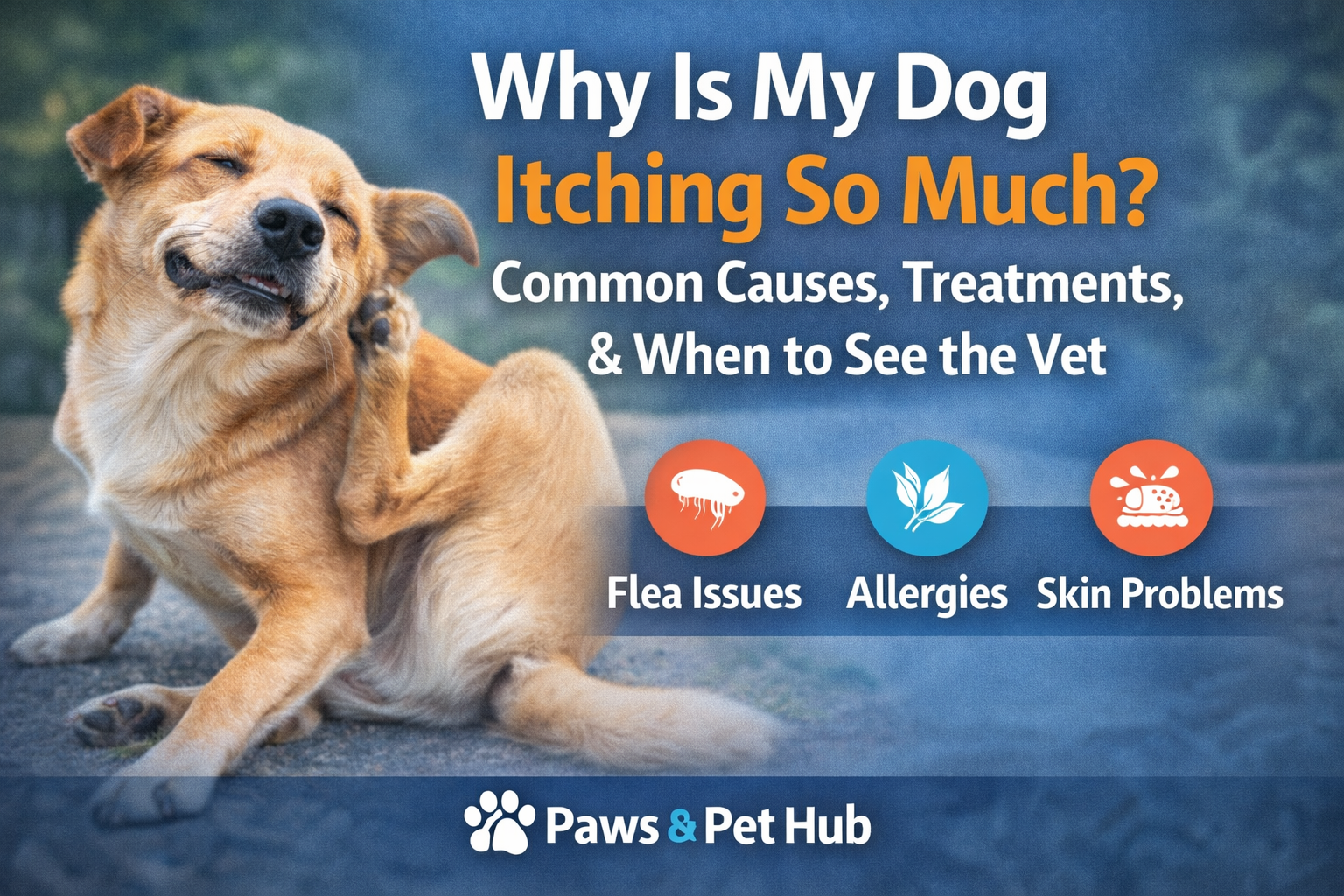

Why is my dog itching? If you’ve been asking this, you’re not alone. Itching, or pruritus, is one of the most common reasons dogs visit the vet. It can range from a mild seasonal problem to a sign of a more serious underlying condition.
This guide explains the most common causes of dog itching, practical steps you can take at home, and when to seek veterinary care.
Signs Your Dog Is Itching: Why Is My Dog Itching
Dogs don’t just scratch — itching can show up in several ways:
- Excessive scratching, licking, or chewing
- Rubbing their body or face on furniture or carpet
- Red, inflamed, or scabby skin
- Hair loss or thinning fur
- Frequent ear infections or head shaking
- Hot spots (moist, sore patches of skin)
Noticing these signs early helps you address the problem before it becomes serious.
Common Causes of Dog Itching: Why Is My Dog Itching
1. Fleas (Even If You Can’t See Them)
Fleas are the most common cause of dog itching. Even a single flea bite can trigger intense reactions in sensitive dogs.
Key points:
- Fleas are tiny and easy to miss
- Indoor dogs can still get fleas
- Flea allergy dermatitis often causes severe itching around the tail base
Tip: Year-round flea prevention is essential. Learn more from the RSPCA dog care guide.
2. Environmental Allergies (Atopy)
Dogs, like humans, can be allergic to environmental triggers:
- Pollen
- Dust mites
- Grass or mould
Signs of allergies:
- Seasonal itching
- Red, inflamed paws from licking
- Face rubbing or ear problems
Environmental allergies are lifelong but can be managed with vet guidance and home care.
3. Food Allergies or Intolerances
Some dogs react to proteins in their diet, such as:
- Chicken or beef
- Dairy products
Symptoms include:
- Year-round itching
- Recurring ear infections
- Vomiting or diarrhoea
Important: Food allergies cannot be reliably diagnosed with blood tests. A vet-guided elimination diet is required. More on dietary management at the BVA pet health resources.
4. Skin Infections
Bacterial or yeast infections often occur secondary to allergies or broken skin.
Watch for:
- Strong, musty odour
- Greasy or flaky skin
- Thickened or darkened patches
- Painful hot spots
These infections usually require prescription treatment from your vet.
5. Parasites Other Than Fleas
Mites, including those that cause sarcoptic mange, can lead to:
- Severe itching
- Hair loss
- Crusty skin
- Transmission to other pets
Prompt veterinary attention is essential for these cases.
How to Help a Dog That Is Itching
While veterinary guidance is always recommended, you can support your dog at home:
- Keep flea prevention up to date
- Bathe with a vet-approved soothing shampoo
- Wash bedding and soft toys regularly
- Avoid changing foods without vet guidance
- Keep a diary of flare-ups (seasonal clues help!)
⚠️ Never use human creams or medications — many are toxic to dogs.
When to See a Vet for Dog Itching: Why Is My Dog Itching
Book a veterinary appointment if:
- Itching persists for more than a few days
- Skin becomes red, sore, or infected
- Your dog is losing fur
- Ear infections occur
- Home treatments aren’t effective
Early intervention can prevent long-term skin problems and save money in the long run.
How Vets Treat Itchy Dogs
Treatment depends on the underlying cause and may include:
- Prescription flea control
- Anti-itch medications
- Antibiotics or antifungals
- Special diets
- Long-term allergy management plans
Many itchy dogs require ongoing care rather than a one-time solution — and that’s normal.
Home-Care Example
A 5 kg dog with mild seasonal itching:
- Bathe weekly with vet-approved shampoo
- Keep bedding and toys clean
- Maintain flea prevention year-round
- Track flare-ups in a diary
This routine helps manage mild itching while you work with your vet to identify the cause.
Final Thoughts
Itching is uncomfortable and often underestimated. The good news? Most itchy dogs can be managed successfully once the underlying cause is identified.
If your dog is constantly scratching, don’t ignore it — help is available, and early intervention makes a huge difference.
Also see: Why Do My Pets Do These Weird Things?


Leave a Reply