
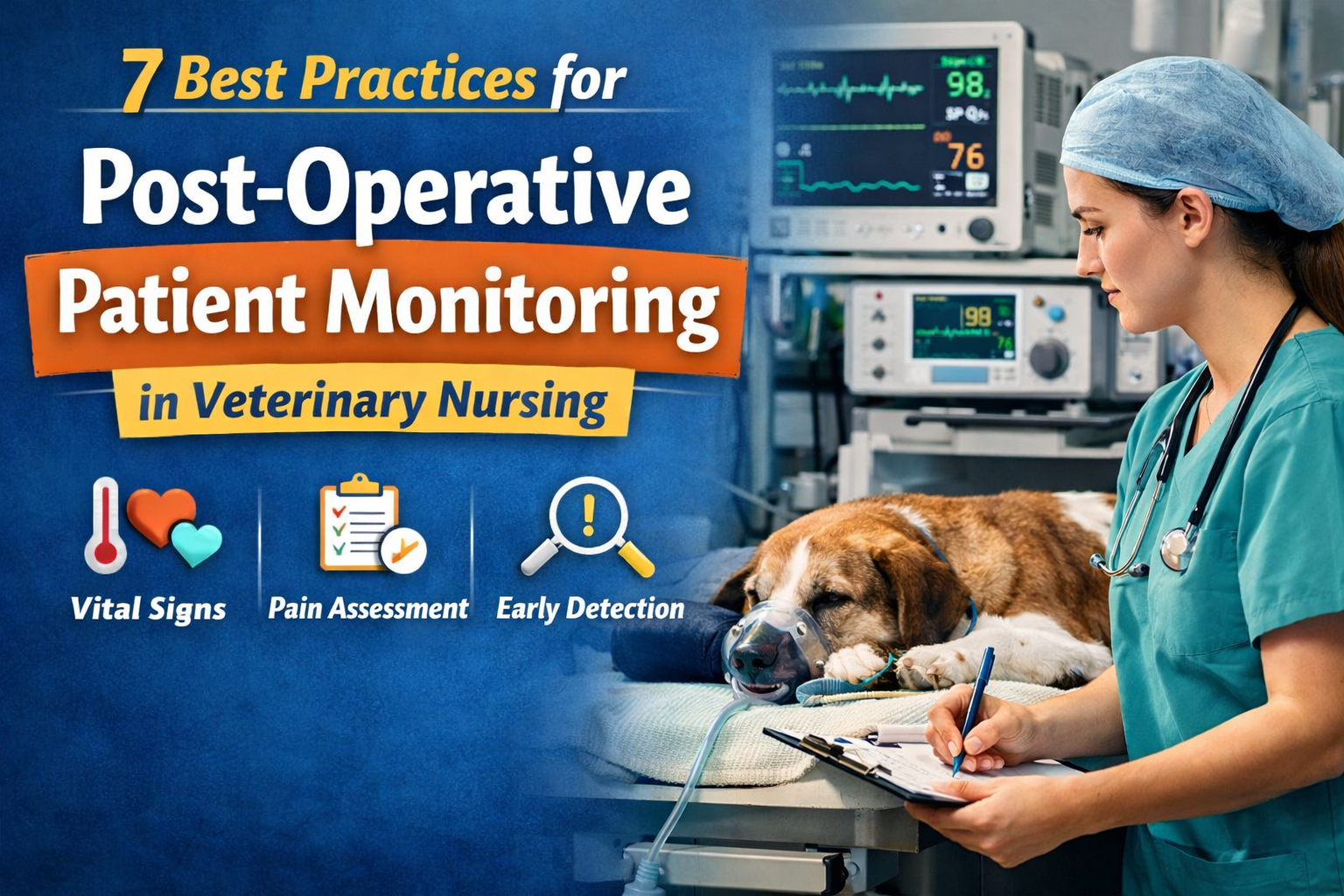

Post-operative patient monitoring in veterinary nursing is one of the most critical responsibilities of a Registered Veterinary Nurse (RVN).
Careful monitoring helps detect complications early, improves patient recovery, and ensures high standards of patient welfare.
Read also: Patient Warming in Veterinary Anaesthesia: Best Practices
Why Post-Operative Patient Monitoring Matters in Veterinary Nursing
After surgery, patients are at risk of:
- Hypothermia – due to anaesthesia or long procedures
- Shock or haemorrhage – particularly after major surgeries
- Pain and discomfort – which can affect recovery
- Respiratory or cardiac complications – especially in older or brachycephalic patients
Early recognition of these issues can mean the difference between a smooth recovery and an emergency situation.
Key Parameters in Post-Operative Patient Monitoring in Veterinary Nursing
RVNs play a vital role in observing and recording post-operative changes. Focus on these parameters:
1. Temperature
- Monitor core body temperature frequently, especially in small or young patients.
- Use warming blankets or fluids if hypothermia occurs.
2. Heart Rate and Rhythm
- Check pulse rate and rhythm at regular intervals.
- Be alert for bradycardia, tachycardia, or arrhythmias.
3. Respiratory Rate and Pattern
- Watch for shallow or laboured breathing, which may indicate pain or anaesthetic complications.
4. Pain Assessment
- Use validated pain scoring tools such as the Glasgow Composite Pain Scale.
- Administer analgesia as prescribed and reassess regularly.
5. Surgical Site
- Inspect for swelling, redness, bleeding, or discharge.
- Ensure bandages or dressings remain secure and clean.
6. Hydration and Appetite
- Monitor for vomiting, diarrhoea, or reduced water intake.
- Encourage early feeding if appropriate, and document intake.
Practical Tips for Efficient Post-Operative Monitoring in Veterinary Nursing
- Use monitoring charts – clear documentation improves communication between nursing staff.
- Prioritise high-risk patients – those with anaesthetic complications, multiple surgeries, or chronic disease.
- Educate clients – provide post-op care instructions and warning signs to watch for at home.
- Communicate effectively – handover notes should be clear, concise, and updated frequently.
Common Challenges and How to Overcome Them in Post Operative Patient Monitoring in Veterinary Nursing
- Time constraints in busy clinics: Use structured monitoring schedules and delegate tasks appropriately.
- Uncooperative patients: Gentle handling, sedation when necessary, and familiarisation with staff can reduce stress.
- Data gaps: Always double-check observations and document immediately to maintain continuity of care.
Documentation and Monitoring Charts
Accurate documentation is a vital component of post-operative patient monitoring in veterinary nursing. Recording parameters such as heart rate, respiratory rate, temperature, pain scores, and mucous membrane colour allows the veterinary team to identify trends over time.
Monitoring charts provide a structured method for documenting patient observations and ensure that important information is not missed during busy clinical shifts. Regular chart updates also improve communication between veterinary surgeons, nurses, and overnight staff.
For high-risk patients, such as those recovering from major abdominal surgery or patients with underlying cardiac disease, more frequent monitoring may be required. Consistent documentation ensures that any deterioration in the patient’s condition is quickly recognised and addressed.
The Importance of Individualised Post-Operative Patient Monitoring in Veterinary Nursing
Every patient recovering from surgery will have different monitoring needs, so post-operative care should always be tailored to the individual. Factors such as the patient’s age, breed, underlying health conditions, and the type of surgical procedure performed can all influence recovery.
For example, brachycephalic breeds may require closer respiratory monitoring, while geriatric patients may take longer to regain normal physiological parameters after anaesthesia. By adapting monitoring frequency and nursing care to each patient, veterinary nurses can identify subtle changes early and provide appropriate interventions that support a smoother and safer recovery process.
The Association of Veterinary Anaesthetists recommends continuous monitoring of vital parameters such as heart rate, blood pressure, and oxygen saturation during anaesthesia and recovery to ensure patient safety.
Conclusion
Post-operative monitoring is a cornerstone of veterinary nursing practice. By focusing on vital signs, pain assessment, and surgical site management, RVNs can detect early complications and improve patient outcomes. Efficient documentation, client communication, and prioritisation ensure that every patient receives the best possible care during recovery.
Take-Home Points for RVNs:
- Monitor vital parameters regularly and systematically.
- Use validated pain scoring tools.
- Document clearly and communicate effectively with colleagues and clients.
- Recognise high-risk patients and adapt care accordingly.



Leave a Reply