

Introduction
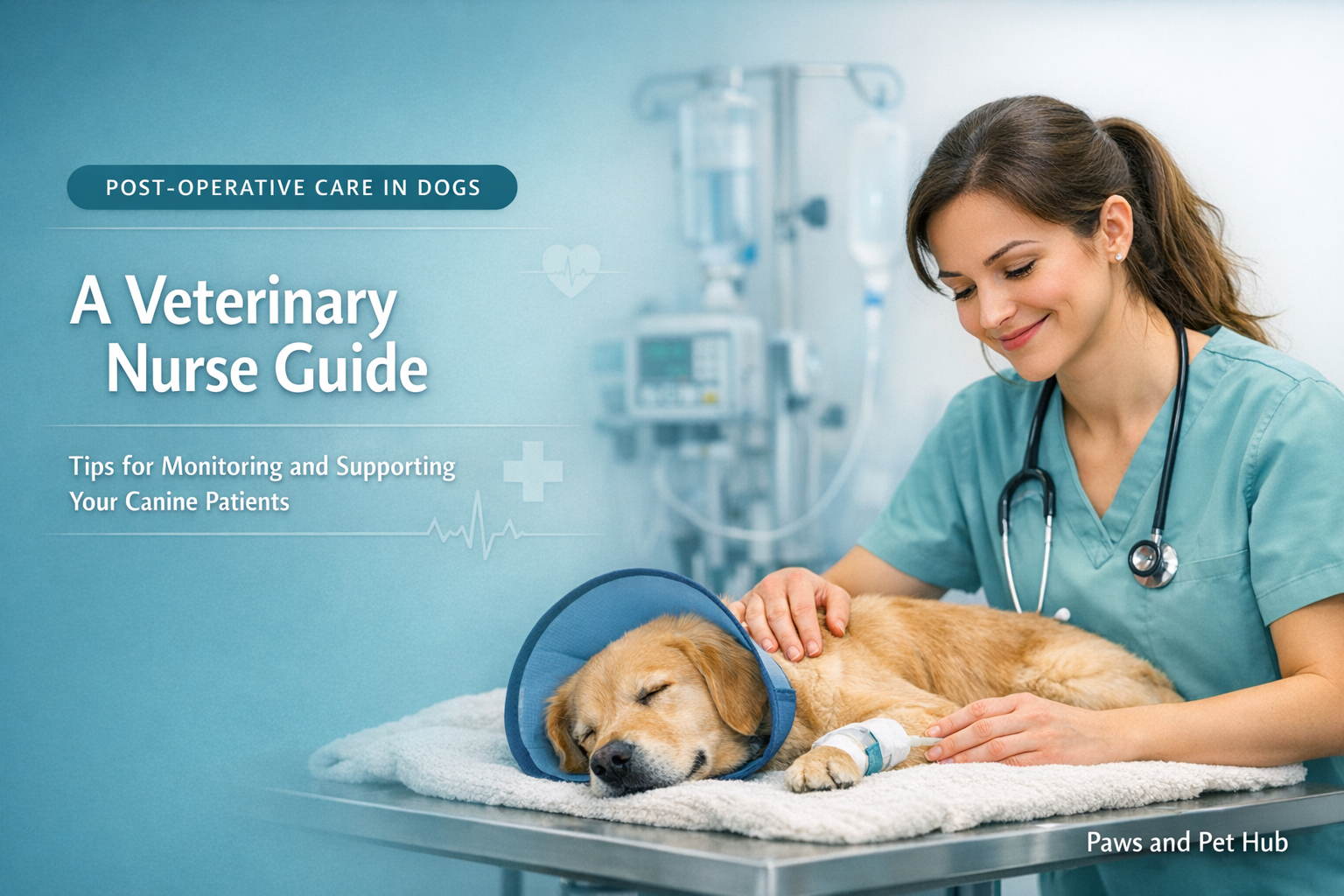
Providing excellent post-operative care in dogs is one of the most important responsibilities of veterinary nurses. Surgical procedures can be stressful for canine patients, and proper nursing care ensures smooth recovery, prevents complications, and promotes comfort.
Veterinary nurses play a pivotal role in monitoring recovery, managing pain, maintaining hydration, and educating pet owners. By mastering these skills, nurses can improve patient outcomes and support long-term health.
1️⃣ Monitoring Vital Signs
Accurate and frequent monitoring is essential for safe post-operative care in dogs. Key vital signs include:
- Temperature – hypothermia or fever may indicate complications
- Heart rate – monitor for arrhythmias or tachycardia
- Respiratory rate – watch for distress or shallow breathing
- Mucous membrane colour and capillary refill time – indicators of perfusion
Recording these observations at regular intervals allows veterinary nurses to identify issues early and act promptly.
2️⃣ Pain Assessment and Analgesia
Effective pain management is critical for comfort and recovery. Veterinary nurses should:
- Use validated pain scoring systems for dogs
- Administer analgesics according to veterinary guidance
- Monitor the dog’s behaviour for signs of pain such as restlessness, vocalisation, or guarding
By combining careful pain assessment with timely analgesia, nurses ensure safe and comfortable recovery during post-operative care in dogs.
3️⃣ Fluid Therapy and Nutrition
Maintaining hydration is key for recovery. Strategies include:
- Administering IV fluids as prescribed
- Encouraging drinking and eating as tolerated
- Monitoring urine output and hydration status
Proper fluid therapy supports organ function, aids healing, and reduces the risk of complications.
4️⃣ Wound Care and Hygiene
Preventing infection and promoting healing requires vigilant nursing care:
- Inspect surgical sites for redness, swelling, or discharge
- Change bandages according to protocol
- Maintain a clean environment and hygiene around the recovery area
Attention to detail in wound care is a critical part of post-operative care in dogs.
5️⃣ Owner Communication
Veterinary nurses must educate owners to support recovery at home:
- Explain how to monitor incision sites
- Teach signs of pain or infection
- Advise on activity restrictions and feeding schedules
- Provide contact information for urgent concerns
Engaging owners ensures continuity of care and supports long-term wellbeing.
FAQ Section
Q: How often should a post-operative dog be monitored?
A: Frequent monitoring is essential in the first 24–48 hours, with vital signs and incision sites checked regularly according to protocol.
Q: What are common complications after surgery?
A: Pain, infection, swelling, dehydration, and adverse reactions to medication are common concerns.
Q: Can owners give pain medication at home?
A: Only if specifically prescribed by the veterinarian. Never give human medications or unapproved drugs.
In addition to in-clinic care, veterinary nurses should provide guidance to pet owners on supporting recovery at home. Teaching owners how to check incision sites, observe for signs of pain or swelling, and follow feeding and exercise instructions complements professional post-operative care in dogs.
Consistent monitoring both in the clinic and at home helps prevent complications, ensures timely intervention, and promotes a smoother, safer recovery for the canine patient
Veterinary nurses should also emphasise the importance of follow-up appointments after surgery. Scheduling rechecks allows the veterinary team to assess healing, adjust medications if needed, and answer any owner questions.
These follow-ups are a vital part of comprehensive post-operative care in dogs, ensuring that any potential complications are identified early and the dog recovers safely and comfortably.
Final Thoughts
Post-operative care in dogs is a cornerstone of veterinary nursing. By combining careful monitoring, effective pain management, proper hydration, meticulous wound care, and clear communication with owners, veterinary nurses can ensure safe recovery and support optimal health for their canine patients.
“Vigilance, compassion, and precise nursing care are the keys to successful post-operative care in dogs — every observation and intervention matters.”
Useful links:
Animal Welfare Foundation – Caring for Your Pet Before and After an Operation – Guidance on post‑operative monitoring, feeding, exercise restrictions, and wound care.



Leave a Reply