
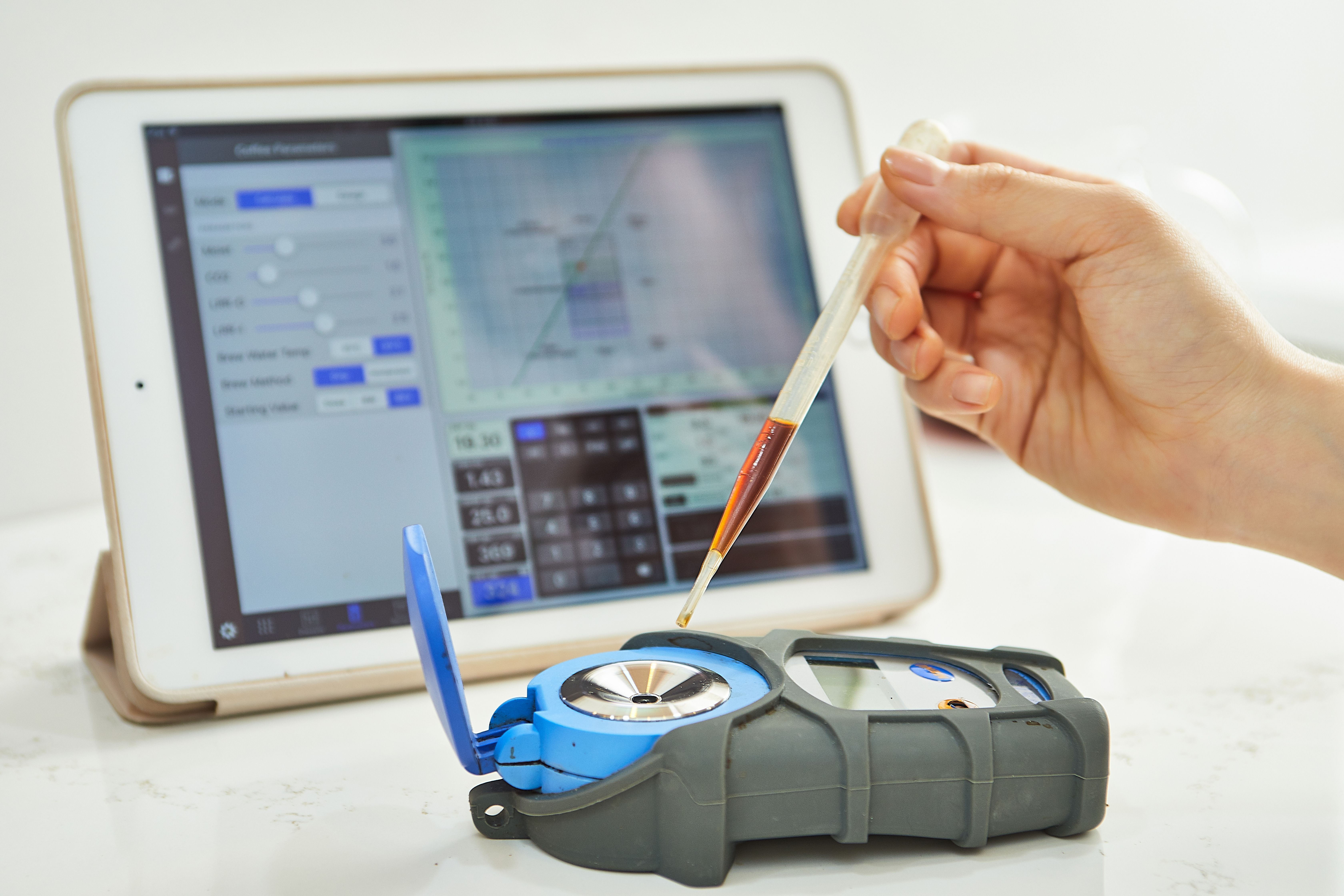

Total solids are one of those veterinary blood tests that can look incredibly simple.
Put plasma on a refractometer, read the number and record it.
Done.
Except, as usual, there’s a little more to it.
Understanding total solids in dogs and cats can be particularly useful when you’re already taking manual PCVs, because the two results can provide complementary information.
In order to read total solids, you need to run a manual PCV.
Take a look at 7 Essential Facts About Manual PCV Every Veterinary Nurse Should Know
What are total solids?
Total solids are a measurement obtained from plasma or serum using a refractometer.
The result broadly reflects the concentration of dissolved substances within the sample, with proteins contributing significantly.
In clinical veterinary practice, total solids are often considered alongside PCV and may be useful when assessing things such as hydration, blood loss and protein status.
Are total solids the same as total protein?
Not exactly.
The terms are sometimes used interchangeably in everyday clinical conversation, but technically they are different measurements.
Total protein is typically measured using a laboratory analyser or biochemical method.
Total solids obtained using a refractometer estimate the concentration of dissolved solids in the sample.
Proteins contribute significantly to the reading, but they’re not the only substance contributing.
What are normal total solids in dogs and cats?
Reference ranges vary according to the laboratory, equipment and patient population.
As a broad guide, total solids in dogs and cats are often somewhere around 5–8 g/dL, but you should always use the reference interval provided by your laboratory or practice.
Don’t rely on a single memorised range when making clinical decisions.
What can cause high total solids?
There are several possible explanations for increased total solids.
Dehydration
This is one of the most important considerations.
When a patient loses water, substances dissolved in the plasma become more concentrated.
As a result, total solids can increase.
If the patient also has an increased PCV, the combination may support haemoconcentration in the appropriate clinical context.
Increased protein concentration
Increased proteins can contribute to an elevated total solids result.
There are several possible causes of increased plasma proteins, including inflammatory or immune-mediated processes and other diseases.
The result therefore needs to be interpreted alongside the rest of the patient’s blood work.
Sample issues
As with any test, sample quality matters.
Haemolysis, lipaemia or other sample abnormalities can potentially affect interpretation depending on the measurement method.
If a result looks unexpected, consider the sample before assuming the patient is the problem.
What can cause low total solids?
Low total solids may occur when circulating protein concentrations are reduced.
Possible causes include:
- Blood loss
- Protein-losing enteropathy
- Protein-losing nephropathy
- Reduced protein production
- Severe malnutrition
- Dilution following fluid therapy
The underlying cause needs to be investigated based on the patient.
Total solids and blood loss
This is one of the situations where total solids can become particularly interesting.
When a patient loses whole blood, they’re losing both red blood cells and plasma proteins.
However, the timing of sampling matters.
In the early stages of acute haemorrhage, PCV and total solids may not immediately appear dramatically reduced because the patient has lost whole blood rather than diluted blood.
As fluid moves into the vascular compartment, the blood becomes diluted and the PCV may fall.
Protein concentrations can also change.
This is why serial measurements can be useful.
Total solids and dehydration
A dehydrated animal may have an increased PCV and increased total solids.
This combination can support the suspicion of haemoconcentration.
However, don’t diagnose dehydration from the numbers alone.
The patient’s physical examination and other findings are still essential.
For example, a patient with diarrhoea, tacky mucous membranes, reduced skin elasticity and an increased PCV/TS combination gives you a much more convincing clinical picture.
Total solids and anaemia
Total solids can add useful context when a patient has a low PCV.
Imagine two patients:
Patient A: Low PCV + low total solids
Patient B: Low PCV + normal total solids
They both have anaemia, but the surrounding picture may be different.
Low total solids alongside anaemia can raise consideration of blood loss or protein loss, although it doesn’t prove either diagnosis.
Why serial measurements are useful
As with PCV, a single total solids result is just a snapshot.
A series of measurements can show a trend.
For example:
Admission: PCV 55%, TS 8.2 g/dL
After fluids: PCV 47%, TS 7.1 g/dL
Later: PCV 43%, TS 6.8 g/dL
That downward movement could be consistent with correction of haemoconcentration.
The actual interpretation depends on the patient and what has happened between samples.
Total solids in hospitalised patients
Veterinary nurses may encounter total solids being monitored in patients with:
- Gastrointestinal disease
- Haemorrhage
- Dehydration
- Critical illness
- Fluid therapy
- Severe inflammation
- Suspected protein loss
- Anaemia
They’re quick to perform and can provide useful information at the bedside.
Don’t forget the clinical picture
This is probably the biggest takeaway from understanding total solids in dogs and cats.
Don’t look at a number and immediately attach a diagnosis to it.
Instead, ask:
What is the PCV?
What are the total solids?
How do they compare with previous results?
What fluids has the patient received?
Is there evidence of blood loss?
What does the physical examination show?
Do the other blood results support the same story?
That’s where the numbers become genuinely useful.
Final thoughts
Understanding total solids in dogs and cats is another small skill that can make in-house blood testing much more informative.
Total solids shouldn’t be interpreted in isolation, but when combined with PCV, clinical examination and trends over time, they can provide useful clues about what’s happening inside the patient.
And if you’re already spinning a PCV, checking total solids is often a quick way of getting another piece of the puzzle from the same sample.



Leave a Reply