

Introduction
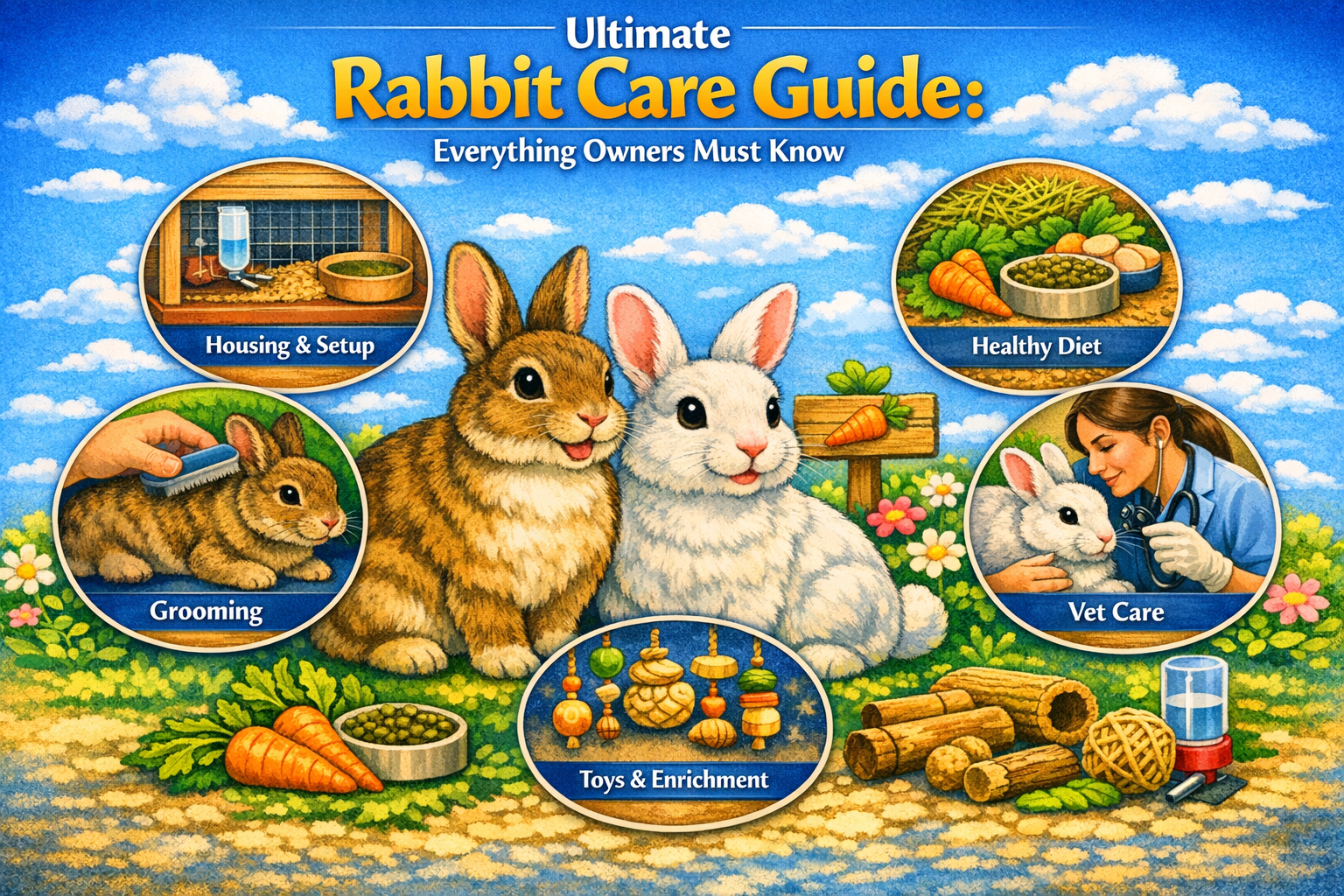
Rabbits are intelligent, social and highly sensitive animals that require much more specialised care than many owners realise. A proper rabbit care guide is essential for anyone looking to provide a safe, healthy and enriching life for their pet.
Unlike common misconceptions, rabbits are not low-maintenance pets. They require a carefully balanced diet, appropriate housing, regular veterinary care, and daily mental stimulation.
This guide covers everything you need to know about pet rabbit care, from diet and housing to behaviour and health.
Read also: Pet Owner Tips – Paws and Pet Hub
Understanding Rabbit Needs
Rabbits are prey animals, which means their behaviour and biology are shaped by survival instincts. In the wild, they rely on speed, burrowing, and social groups to stay safe.
Because of this, domestic rabbits need:
- A safe, secure environment
- Constant access to fibre-rich food
- Social interaction (ideally another rabbit)
- Space to run, jump and explore
Meeting these needs is the foundation of good rabbit welfare.
Housing Your Rabbit Properly
One of the most important parts of any rabbit care guide is housing.
Indoor vs Outdoor Housing
Indoor Rabbits
Indoor rabbits are generally healthier and live longer due to:
- Stable temperatures
- Protection from predators
- Better social interaction with owners
Outdoor Rabbits
If kept outdoors, rabbits must have:
- A secure, weatherproof hutch
- Protection from foxes and predators
- Constant access to a run or large enclosure
Minimum Space Requirements
A common mistake is keeping rabbits in small hutches. Rabbits need space to:
- Hop
- Stretch fully
- Stand upright
- Run and explore
A hutch alone is not enough — they need a large attached run or free-roaming space.
Rabbit Diet and Nutrition
A correct rabbit diet is essential for preventing disease and maintaining digestive health.
The Ideal Rabbit Diet Includes:
1. Hay (80–90% of diet)
Hay should make up the majority of your rabbit’s food intake. It provides:
- Fibre for gut health
- Dental wear to prevent overgrowth
- Mental stimulation
Best types include:
- Timothy hay
- Meadow hay
- Orchard grass
2. Fresh Vegetables
Daily fresh veg should be included, such as:
- Kale
- Coriander
- Parsley
- Romaine lettuce
3. Pellets (limited amount)
High-quality rabbit pellets should be:
- Measured carefully
- Not used as the main food source
4. Fresh Water
Always provide clean, fresh water in a bowl (preferred over bottles).
Rabbit Behaviour and Enrichment
Understanding rabbit behaviour is key to good care.
Normal Behaviours:
- Binkying (jumping with joy)
- Nudging and sniffing
- Grooming
- Digging and chewing
Signs of Stress or Illness:
- Hiding excessively
- Loss of appetite
- Teeth grinding (pain indicator)
- Lethargy
Enrichment Ideas:
- Tunnels and hiding places
- Cardboard boxes
- Chew toys
- Digging trays
- Puzzle feeders
Boredom is a major welfare issue in rabbits, so enrichment is essential.
Rabbit Health and Common Problems
A strong rabbit health guide helps owners recognise early signs of illness.
Common Health Issues:
1. Dental Disease
Rabbit teeth grow continuously and can become overgrown if not worn down properly.
Signs include:
- Drooling
- Weight loss
- Difficulty eating
2. GI Stasis (Gut Stasis)
A life-threatening condition where the digestive system slows or stops.
Signs include:
- Not eating
- Small or no faecal pellets
- Lethargy
3. Respiratory Infections
Often caused by bacteria, leading to:
- Sneezing
- Nasal discharge
4. Parasites
Including mites and fleas.
Rabbit Grooming and Hygiene
Regular grooming helps maintain health, especially in long-haired breeds.
Grooming includes:
- Brushing fur
- Checking for mats
- Nail trimming
- Monitoring skin condition
Rabbits also groom themselves, but they still need human support.
Social Needs of Rabbits
Rabbits are highly social animals and should ideally be kept in pairs or groups.
Best pairing:
- Neutered male + neutered female
Benefits include:
- Reduced stress
- Improved behaviour
- Better mental health
- Increased lifespan
Solitary rabbits often develop behavioural and emotional issues.
Veterinary Care for Rabbits
Rabbits require regular veterinary attention.
Essential care includes:
- Annual health checks
- Vaccinations (Myxomatosis & RVHD)
- Neutering (important for health and behaviour)
Always ensure your vet has experience with rabbits, as they are considered exotic pets.
Signs of a Healthy Rabbit
A healthy rabbit will:
- Eat and drink regularly
- Produce plenty of round, firm droppings
- Have bright eyes and clean nose
- Show normal social behaviour
- Be active and alert
Any change in these signs should be taken seriously.
Common Mistakes Rabbit Owners Make
Many welfare issues come from misinformation.
Common mistakes:
- Feeding too many pellets
- Not enough hay
- Small housing
- Keeping rabbits alone
- Lack of enrichment
- Delaying vet visits
Avoiding these dramatically improves rabbit welfare.
Summary
A proper rabbit care guide shows that rabbits are complex, intelligent animals that require dedicated care. From diet and housing to social needs and veterinary support, every aspect of their environment matters.
With the right setup and understanding, rabbits can live long, healthy and enriched lives as wonderful companion animals.
Useful link: Pet Rabbits in the UK – RSPCA




Leave a Reply