
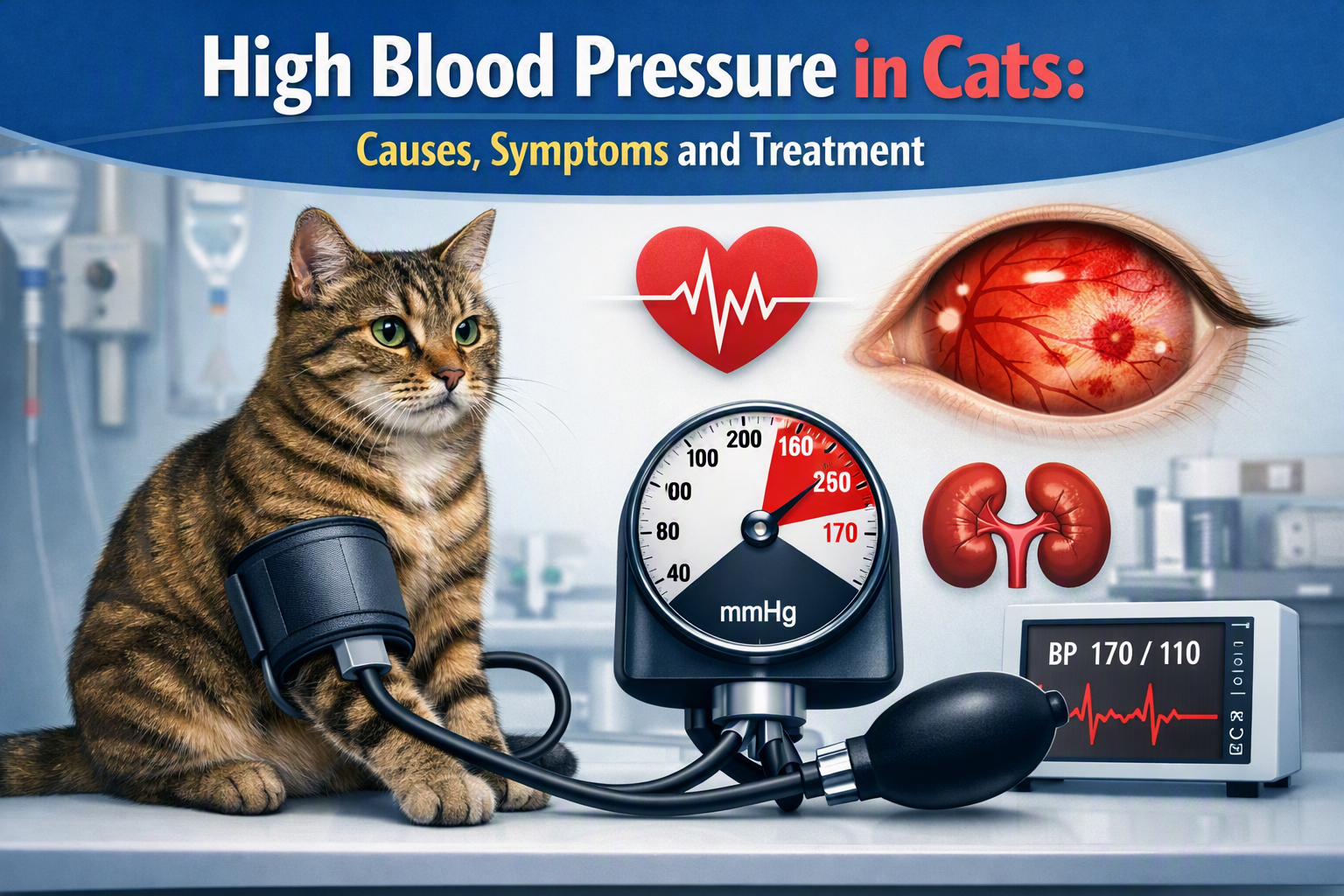

High blood pressure in cats, also known as feline hypertension, is an important condition that veterinary nurses should be familiar with.
Although hypertension can occur without an identifiable underlying disease, it is frequently associated with other conditions, particularly chronic kidney disease (CKD) and hyperthyroidism.
The challenge is that cats with hypertension may show few obvious signs until high blood pressure has already affected organs such as the eyes, brain, kidneys or cardiovascular system.
This makes accurate blood pressure measurement and appropriate monitoring particularly important.
What is high blood pressure in cats?
Blood pressure is the force exerted by circulating blood against the walls of the blood vessels.
When this pressure remains abnormally high, it is known as systemic hypertension.
In cats, systolic blood pressure (SBP) is commonly used when assessing hypertension and the potential risk of target organ damage.
The International Society of Feline Medicine uses the following categories:
| SBP | Category | Risk of target organ damage |
|---|---|---|
| <150 mmHg | Normotensive | Minimal |
| 150–159 mmHg | Borderline | Low |
| 160–179 mmHg | Hypertensive | Moderate |
| ≥180 mmHg | Severely hypertensive | High |
These values should not be interpreted in isolation. Blood pressure is labile in cats and can increase because of stress, anxiety and the veterinary environment. Repeat measurements using a consistent technique are therefore important.
What causes hypertension in cats?
Feline hypertension may be classified broadly as either secondary hypertension or hypertension where no underlying cause is identified.
Chronic kidney disease
Chronic kidney disease is one of the most important conditions associated with feline hypertension.
The relationship between CKD and hypertension is complex. Cats with CKD may develop hypertension, while increased blood pressure can also contribute to renal vascular and glomerular damage.
For this reason, blood pressure monitoring should form part of the assessment and ongoing management of cats with CKD.
Hyperthyroidism
Hyperthyroidism is another important cause or association of hypertension in older cats.
The increased metabolic and cardiovascular activity associated with hyperthyroidism can contribute to elevated blood pressure.
Cats diagnosed with hyperthyroidism should therefore have blood pressure assessed as part of their wider clinical evaluation.
Other causes
Other systemic conditions and medications can also contribute to hypertension.
Some cats have no identifiable underlying disease and may be considered to have primary or idiopathic hypertension.
The ISFM guidelines note that most feline hypertension occurs in association with another disease, although some cats have no obvious underlying cause.
What are the symptoms of high blood pressure in cats?
One of the difficulties with feline hypertension is that there may be no obvious clinical signs initially.
When signs do occur, they may be related to the organ being affected.
Vision changes
Hypertensive ocular disease can result in retinal damage and visual impairment.
Owners may notice:
- Sudden blindness
- Bumping into furniture
- Dilated pupils
- Difficulty navigating
- Behavioural changes
Sudden visual loss should be taken seriously and warrants veterinary assessment.
Neurological signs
Severe hypertension can affect the brain.
Possible signs include:
- Seizures
- Ataxia
- Disorientation
- Depression
- Altered behaviour
- Vestibular abnormalities
These signs have many possible causes, so hypertension should be considered alongside other differentials.
Cardiovascular abnormalities
Hypertension can increase the workload of the heart.
Possible findings include:
- Gallop sounds
- Murmurs
- Arrhythmias
- Changes associated with left ventricular hypertrophy
Renal disease
Kidney disease may already be present when hypertension is diagnosed.
Monitoring renal parameters and urine findings can therefore be important when investigating a hypertensive cat.
How is feline hypertension diagnosed?
The first step is obtaining a reliable blood pressure measurement.
Non-invasive blood pressure monitoring is commonly used in practice, with Doppler and high-definition oscillometric methods among the techniques considered useful in cats.
The cat should ideally be allowed time to acclimatise before measurements are taken.
A quiet environment and calm handling can help reduce stress-related increases in blood pressure.
Why isn’t one high reading enough?
Cats can experience significant changes in blood pressure when stressed.
A single elevated reading may therefore not represent the cat’s usual blood pressure.
Repeated measurements should be obtained using a consistent technique, while recording factors such as:
- Cuff size
- Measurement site
- Equipment used
- Patient position
- Patient behaviour
- Individual readings
If blood pressure remains elevated, the veterinary team can then assess the patient for underlying disease and target organ damage.
How is high blood pressure in cats treated?
Treatment depends on the severity of hypertension, whether target organ damage is present and whether an underlying disease has been identified.
The overall goal is to reduce the risk of target organ damage.
ISFM guidance identifies amlodipine besylate as the drug of choice for routine treatment of feline hypertension. The treatment plan and dose are determined by the veterinary surgeon based on the individual patient.
Treating the underlying disease
Where hypertension is secondary to another condition, managing that disease is also important.
For example, a cat with both CKD and hypertension requires an approach that considers both conditions rather than treating the blood pressure in isolation.
Similarly, hyperthyroidism should be appropriately investigated and managed when present.
What happens if hypertension is left untreated?
Persistent hypertension can result in target organ damage.
The major organs at risk are:
Eyes: retinal haemorrhage, retinal detachment and visual impairment.
Brain: neurological abnormalities and hypertensive encephalopathy.
Kidneys: vascular and glomerular injury and potential contribution to renal disease.
Heart: increased workload and structural changes such as left ventricular hypertrophy.
Some of these consequences can be irreversible, which is why early recognition matters.
How often should blood pressure be monitored?
There is no single monitoring schedule suitable for every cat.
The frequency of monitoring depends on factors such as:
- Age
- Existing disease
- Previous blood pressure measurements
- Presence of target organ damage
- Response to treatment
- Stability of the patient’s condition
Cats with known hypertension require ongoing monitoring to assess response to treatment and help ensure blood pressure does not remain excessively high.
Cats with conditions associated with hypertension may also benefit from regular screening.
The veterinary nurse’s role
Veterinary nurses can play an important role throughout the assessment and management of feline hypertension.
This includes:
- Preparing appropriate equipment
- Selecting the correct cuff
- Creating a calm environment
- Taking consistent measurements
- Recording individual readings
- Recognising abnormal values
- Monitoring trends over time
- Identifying potential signs of target organ damage
- Supporting owners with monitoring and medication compliance
Good nursing technique can make a significant difference to the reliability of blood pressure measurements.
Frequently asked questions
What blood pressure is considered high in a cat?
An SBP of 160 mmHg or above falls within the hypertensive categories used by IRIS, with increasing risk of target organ damage as SBP rises. Persistent elevations should be interpreted in the context of the individual patient and measurement conditions.
Can stress cause high blood pressure in cats?
Yes. Stress can cause significant temporary increases in feline blood pressure. This is why calm handling, acclimatisation and repeat measurements are important.
Is hypertension common in older cats?
Hypertension is particularly recognised in older cats and is frequently associated with diseases that become more common with age, including CKD and hyperthyroidism.
Can high blood pressure make a cat blind?
Yes. Severe hypertension can cause ocular damage including retinal changes and retinal detachment, potentially resulting in sudden or progressive vision loss.
Final thoughts
High blood pressure in cats can be difficult to recognise because affected patients may initially appear relatively normal.
For veterinary teams, regular blood pressure assessment in at-risk cats provides an opportunity to identify hypertension before serious complications develop.
Accurate measurement, investigation for underlying disease and assessment for target organ damage all form part of a comprehensive approach to feline hypertension.
If you want to learn the practical technique, continue with our guide:
How to Take Blood Pressure in Cats: A 4-Step Veterinary Nurse Guide.



Leave a Reply