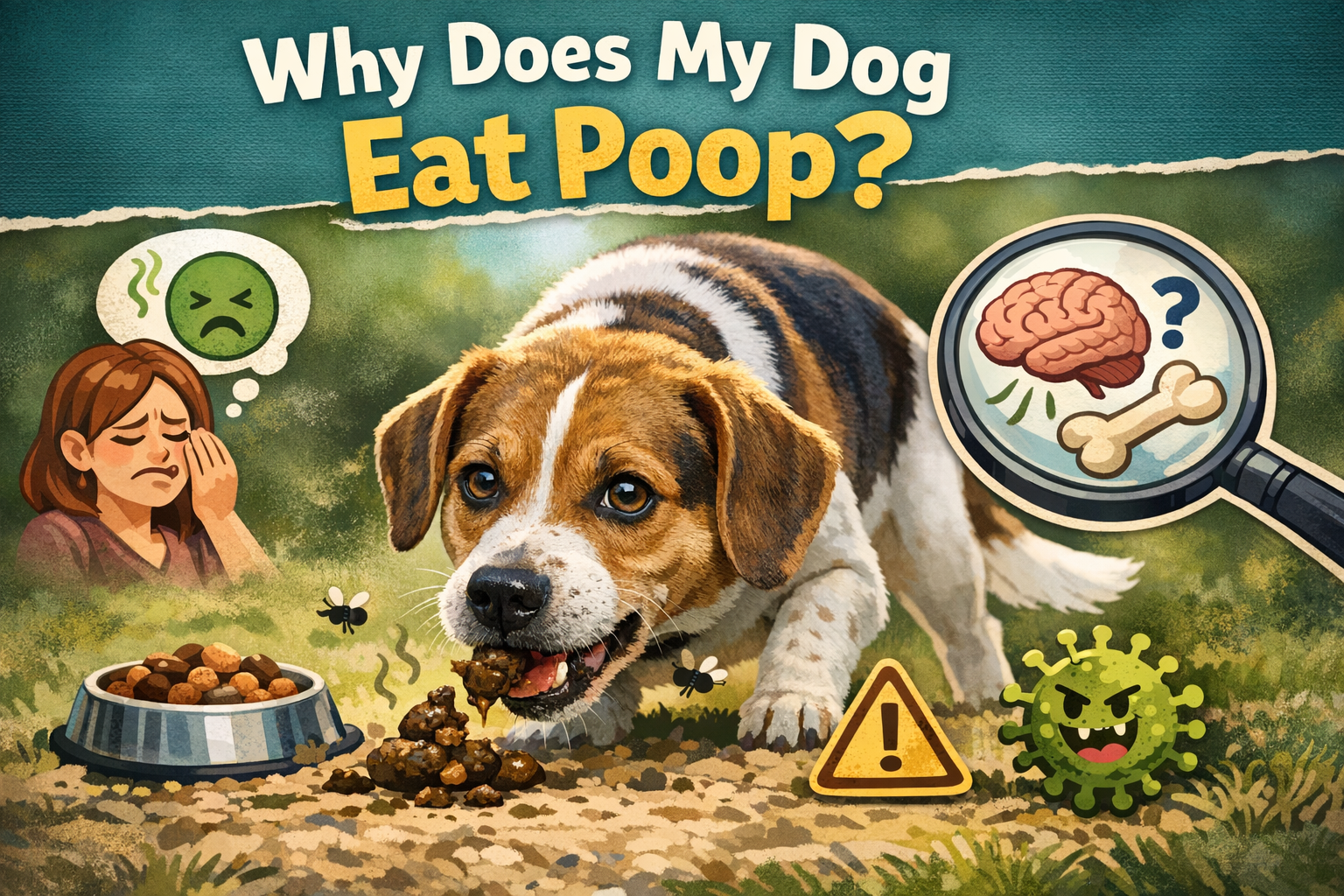

If you’ve caught your Dog eating poop, you’re not alone—and it’s far more common than most owners realise. The behaviour, known as coprophagia, can be unpleasant, confusing, and worrying, especially when it seems to come out of nowhere.
So, why is my dog eating poop in the first place? The answer isn’t always simple. This behaviour can be linked to medical issues, behavioural habits, diet, or even natural instincts inherited from wild ancestors.
In this article, we’ll break down the most common reasons, what it means, and how you can help stop it.
Read also: Why Does My Dog Fart So Much? 6 Causes, Treatments & When to Worry
What Is Coprophagia in Dogs?
Coprophagia is the term used when a dog eats faeces. It can involve their own stool, another dog’s, or even other animals.
While it might seem abnormal to us, in the canine world it can sometimes be instinctive or learned behaviour. However, persistent coprophagia usually signals an underlying issue that needs attention.
Why Is My Dog Eating Poop? The Main Causes
Understanding why is my dog eating poop starts with looking at the root cause. There are several possibilities:
1. Instinctual or Natural Behaviour
In some cases, dogs may eat poop due to instinct. Mother dogs often clean up after their puppies by eating their faeces to keep the den clean and reduce scent markers that could attract predators.
Some dogs retain this behaviour into adulthood, especially if they were exposed to it early in life.
2. Nutritional Deficiencies
A common reason owners ask why is my dog eating poop is diet.
If a dog’s food is lacking in key nutrients (especially fibre, enzymes, or digestibility), they may try to compensate by eating faeces. In some cases, they are attempting to reabsorb nutrients that weren’t fully digested the first time.
Poor-quality diets or inconsistent feeding schedules can increase this behaviour.
3. Hunger or Restrictive Feeding
Dogs that are not getting enough food may resort to eating poop simply because they are hungry.
This can happen if:
- Portion sizes are too small
- Feeding frequency is too low
- The dog is highly active and burning more calories
4. Behavioural Causes (Boredom or Stress)
Behaviour plays a huge role in coprophagia.
Dogs that are:
- Bored
- Anxious
- Left alone for long periods
- Lacking stimulation
may develop unusual habits, including poop eating.
This is especially common in younger dogs and those without enough mental enrichment or exercise.
5. Attention-Seeking Behaviour
Some dogs learn that eating poop gets a reaction from their owner. Even negative attention (shouting, chasing, reacting strongly) can reinforce the behaviour.
If your dog notices it results in attention, they may repeat it.
6. Medical Conditions
If you’re repeatedly asking why is my dog eating poop, it’s important to rule out medical issues such as:
- Parasites (worms)
- Malabsorption disorders
- Diabetes
- Thyroid issues
- Enzyme deficiencies
- Gut imbalances
These conditions can affect digestion and appetite regulation.
A veterinary check is always recommended if the behaviour is new or persistent.
7. Evolutionary Behaviour
Wild canids sometimes eat faeces to keep their environment clean or to avoid attracting predators. While domestic dogs don’t face the same pressures, this instinct may still exist in some individuals.
Is Eating Poop Dangerous for Dogs?
Yes, it can be.
Even though some dogs show no immediate side effects, coprophagia can expose them to:
- Parasites
- Bacteria (such as E. coli or Salmonella)
- Viral infections
- Toxins or medications present in other animals’ waste
So if you’re wondering why is my dog eating poop, it’s not just a behavioural issue—it can also be a health risk.
How to Stop Your Dog Eating Poop
Once you’ve identified possible causes, you can start addressing the behaviour.
1. Improve Diet Quality
Feed a balanced, high-quality diet with:
- Complete nutrition
- Digestible protein
- Appropriate fibre levels
Speak to your vet if you suspect deficiencies.
2. Increase Exercise and Mental Stimulation
A tired dog is less likely to engage in unwanted behaviours.
Try:
- Longer walks
- Sniffing games
- Puzzle feeders
- Training sessions
3. Clean Up Quickly
Remove faeces from your garden or walking areas immediately to reduce opportunity.
4. Train a “Leave It” Cue
Teaching a strong “leave it” command can be highly effective in breaking the habit.
5. Avoid Punishment
Punishing your dog after the fact won’t help and may increase anxiety-related behaviours.
6. Veterinary Check-Up
If you’re still asking why is my dog eating poop after making changes, book a vet appointment to rule out medical causes.
When Should You Be Concerned?
You should seek veterinary advice if:
- The behaviour starts suddenly
- It becomes frequent or obsessive
- Your dog has weight loss or diarrhoea
- There are other behavioural changes
Conclusion
So, why is my dog eating poop? The answer can range from instinct and boredom to diet issues or underlying medical conditions.
While it’s a common behaviour, it’s not something to ignore. Understanding the root cause is key to stopping it effectively and keeping your dog healthy.
With the right combination of diet, enrichment, training, and veterinary support, most dogs can break the habit successfully.
Read also: Why do dogs eat poo? – PDSA



Leave a Reply